Plus: How Army Reserve’s Detachment 201 Commissioned Silicon Valley Executives as Military Officers
Two parallel initiatives are embedding Big Tech directly into government and military operations—raising critical questions about conflicts of interest, security, and the future of the military-industrial complex [
U.S. Army Cyber Divisions and Psychological Operations Units: A Comprehensive Overview
Introduction As cyberspace has emerged as the fifth warfighting domain alongside land, sea, air, and space, the U.S. Army has developed a sophisticated organizational structure to conduct operations in this critical realm. From offensive cyber operations to defensive network protection, and from psychological operations to information warfare, the Army

Security Careers HelpSecurity Careers
The Trump administration announced the U.S. Tech Force on December 15, 2025—a controversial initiative to recruit 1,000 engineers, data scientists, and AI specialists for two-year government stints. The program comes with a notable irony: it’s designed to rebuild technical capacity after the Department of Government Efficiency (DOGE) orchestrated the departure of approximately 260,000 federal employees earlier this year, including entire technology-focused programs like the 18F digital consulting group.
But Tech Force isn’t operating in isolation. Six months earlier, in June 2025, the U.S. Army launched an even more controversial program called Detachment 201: The Executive Innovation Corps, which directly commissioned four Silicon Valley executives as Army Reserve Lieutenant Colonels—without requiring them to complete traditional military training or rise through the ranks.
Together, these programs represent an unprecedented integration of Big Tech into government and military operations. Let’s break down both initiatives, their differences, and what they mean for cybersecurity professionals.
PART 1: The U.S. Tech Force
The Core Details
Compensation: $150,000-$200,000 annually plus federal benefits (health insurance, retirement plans, paid time off, performance-based awards)
Duration: Two-year employment terms starting as early as March 2026
No degree required: The program explicitly states candidates don’t need traditional degrees or minimum experience thresholds—just demonstrable technical skills through work experience, projects, or certifications
Target roles: Software engineers, data scientists, AI experts, cybersecurity specialists, technical project managers
Primary focus: Early-career technologists (5-7 years experience or less)
Placement: Fellows will be embedded directly in federal agencies (DOD, Treasury, State, IRS, DHS, HHS, DOT, Energy, and others), reporting to agency leadership rather than operating as a centralized unit
Website: Applications opened December 16, 2025 at techforce.gov
The Private Sector Partnership
This is where things get interesting from a conflict-of-interest perspective. Over 20 major tech companies have partnered with the program:
- Amazon Web Services
- Microsoft
- Apple
- Meta
- Oracle
- Palantir
- Google/Alphabet
- Nvidia
- Elon Musk’s xAI
These companies will:
- Allow employees to take leaves of absence to join Tech Force (while remaining on their payroll or returning afterward)
- Provide training and mentorship to participants
- Commit to considering Tech Force alumni for employment after their government service
- Nominate experienced engineering managers for temporary government stints
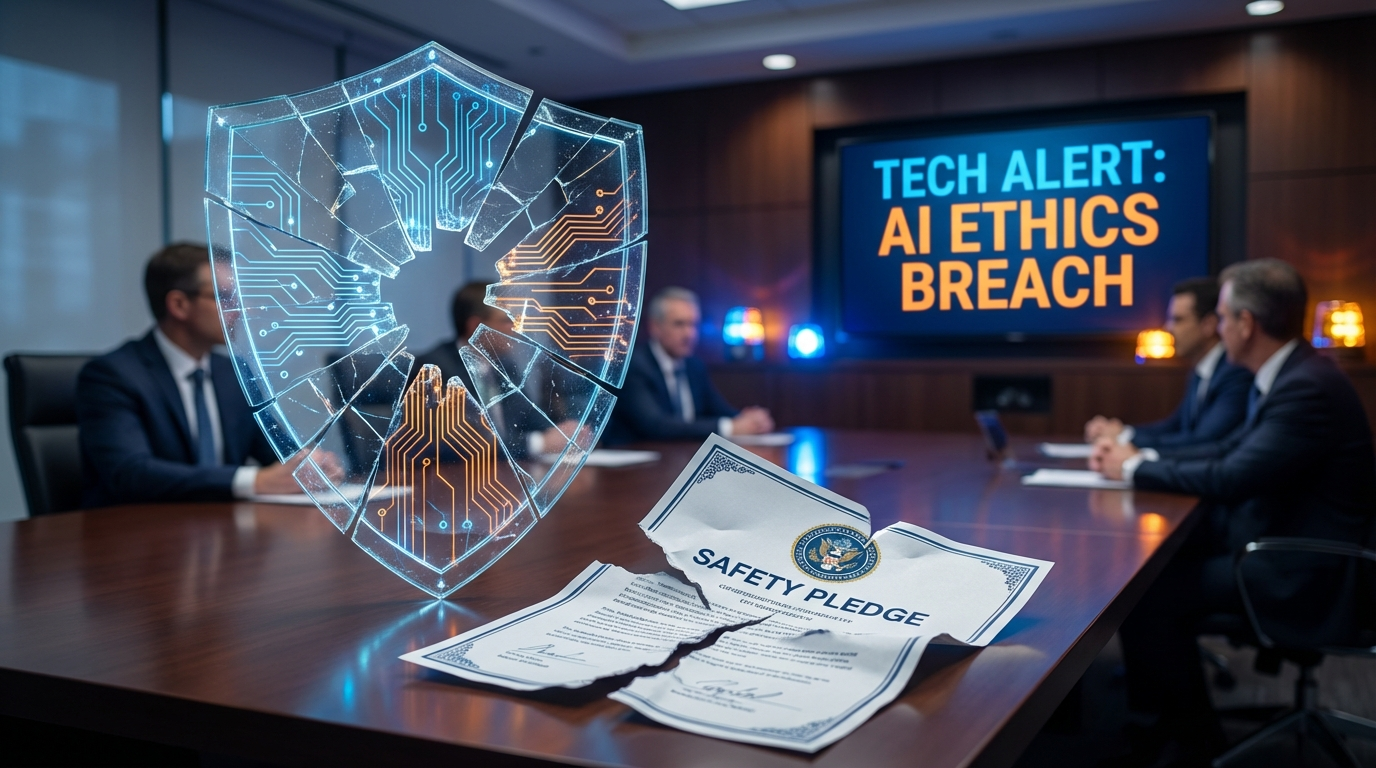
Critical detail: Employees joining from private companies will become full-time government employees subject to ethics regulations, but will not be required to divest stock holdings.
The Mission: AI Dominance and Infrastructure Overhaul
According to OPM Director Scott Kupor (former managing partner at Andreessen Horowitz), the program aims to:
- Accelerate AI implementation across federal agencies
- Modernize legacy systems (many designed decades ago)
- Build the “Trump Accounts” platform at the IRS
- Incorporate advanced AI into military drones and weapons systems (DOD)
- Improve intelligence capabilities using AI (State Department)
- Overhaul electronic health records systems
- Optimize transportation systems with AI-driven solutions
The program is framed as essential to competing with China’s AI ecosystem and maintaining U.S. technological leadership. It’s positioned as a key component of Trump’s AI Action Plan signed in July 2025, which focuses on growing AI infrastructure while reducing regulatory barriers.
The Controversy: Three Major Concerns
1. Conflicts of Interest
Rob Shriver, former acting OPM director and current managing director at Democracy Forward, immediately raised the question: “What are the rules in place to guard against conflicts of interest?”
The concern intensifies when you consider:
- Engineering managers from companies like Palantir, Microsoft, or xAI will work on government projects
- They’ll maintain their stock holdings in these companies
- Their companies could potentially win contracts based on insider knowledge gained during government service
- Tech Force alumni are being actively recruited back to participating companies with insider knowledge of government needs
This follows separate controversy around Trump’s AI advisor David Sacks, whose sweeping ethics waivers allow him to maintain 400+ investments in AI-related tech firms while shaping federal AI policy. Ethics experts have called these “sham ethics waivers” that lack rigorous oversight.
2. Recreating DOGE Problems
Critics worry this could “recreate some of the worst aspects of the early days of DOGE”—bringing in people who don’t understand or respect legal constraints in the public sector.
The timing is particularly jarring:
- 260,000 federal employees pushed out through buyouts, early retirements, or terminations
- Entire tech-focused programs dismantled (18F, substantial portions of USDS)
- Thousands of experienced government technologists lost
- Now scrambling to hire 1,000 early-career replacements
Max Stier, CEO of the Partnership for Public Service, noted to Axios that the program “significantly overlaps with previous initiatives undertaken by USDS before this administration disbanded it.”
The U.S. Digital Service (USDS), established during the Obama administration, had roughly 200 technologists. It was essentially gutted under DOGE. Now Tech Force will bring in 1,000 people—but unlike USDS’s experienced professionals, these will be primarily early-career workers.
3. The Post-Service Pipeline
OPM Director Kupor explicitly stated: “At the end of the program, we’re going to run a very comprehensive job fair with all those private companies coming to meet all these thousand engineers.”
This creates a concerning pipeline:
- Private company employee takes government position
- Gains two years of insider knowledge on federal systems, contracts, and needs
- Returns to private sector with security clearances and government connections
- Their company now has competitive advantage in bidding for federal contracts
From a cybersecurity perspective, this raises questions about:
- Access to sensitive government systems and data
- Security clearance processes for temporary employees
- Intellectual property and knowledge transfer
- Long-term implications for government vendor relationships
PART 2: Army Reserve’s Detachment 201
While Tech Force focuses on civilian government agencies, the Army took an even bolder step six months earlier by directly commissioning senior tech executives as military officers.
The Executive Innovation Corps
Established: June 13, 2025
Name significance: “Detachment 201” references the HTTP 201 status code (“Created”)—a tech industry in-joke that signals this unit’s Silicon Valley DNA
Rank: Lieutenant Colonel (O-5)—a field-grade rank typically requiring 16-20 years of military service
Commitment: Part-time Army Reserve service (one weekend per month, two weeks per year—approximately 120 hours annually)
Training requirement: Two-week crash course (online and at Fort Benning) covering physical fitness, marksmanship, and basic soldiering—notably shorter than traditional officer training
The Inaugural Four Officers
On June 13, 2025, four Silicon Valley executives were sworn in as Army Reserve Lieutenant Colonels:
- Shyam Sankar - Chief Technology Officer, Palantir Technologies
- Andrew “Boz” Bosworth - Chief Technology Officer, Meta
- Kevin Weil - Chief Product Officer, OpenAI
- Bob McGrew - Former Chief Research Officer, OpenAI (now advisor at Thinking Machines Lab)
These aren’t ceremonial appointments. According to Army Chief of Staff spokesman Col. Dave Butler, these officers will “guide rapid and scalable tech solutions to complex problems” and help “make the force leaner, smarter, and more lethal.”
The Mission
According to Army statements, Detachment 201 will:
- Advise on talent management and tech recruitment strategies
- Guide acquisition of commercial technology
- Apply technology to modernize Army doctrine and operations
- Work on “broader conceptual things” rather than specific weapons contracts
- Support the Army Transformation Initiative
The Army specifically notes these officers will work on staff advisory roles rather than leading troops. However, their Lt. Colonel rank means career officers who spent 16-20 years earning that rank must technically salute these “overnight” lieutenant colonels.
The Technology Context
These appointments didn’t happen in a vacuum. Several massive military-tech partnerships were already underway:
Palantir’s TITAN Program: Tactical Intelligence Targeting Access Node—described as the Army’s first “AI-defined” vehicle. A next-generation mobile command center using AI to fuse sensor data and assist battlefield decisions. Palantir’s code is as crucial as the vehicle’s armor.
Meta-Anduril Partnership: $21.9 billion contract for augmented and virtual reality battlefield technology. Meta is providing the AR/VR hardware previously developed by Microsoft for the IVAS (Integrated Visual Augmentation System) program, now managed by Anduril.
OpenAI Military Partnerships: Working with Anduril on AI-enhanced air-defense systems. OpenAI has explicitly pivoted toward military applications under the current administration.
The Backlash: Five Critical Concerns
1. “Rich Tech Bros Cosplaying as Officers”
Military analysts and veterans have expressed outrage at executives receiving high rank without traditional service:
- Rank disparity: Lt. Colonel typically takes 16-20 years to achieve. These executives got it instantly.
- Morale impact: Career officers who sacrificed for decades must now salute tech executives who bypassed the system
- Military culture: Critics call it “a slap in the face” to those who earned rank through service
- Two-tiered system: Creates perception that wealthy elites can buy their way into military leadership
As one critic noted: “Rich tech bros cosplaying the real thing” while lacking the “traditional burdens and sacrifices of military service.”
2. Conflicts of Interest on Steroids
The conflict-of-interest concerns here dwarf those of Tech Force:
Shyam Sankar (Palantir CTO):
- Palantir holds massive defense contracts including the TITAN program
- Now advising the Army on technology strategy and acquisitions
- His company directly benefits from decisions he can influence
Andrew Bosworth (Meta CTO):
- Meta has the $21.9 billion AR/VR battlefield contract
- Advising on military technology integration
- His employer profits from the systems he’s helping design
Kevin Weil & Bob McGrew (OpenAI):
- OpenAI partnering with Anduril on military AI systems
- Advising on AI implementation in military doctrine
- Their company (current or former) benefits from military AI adoption
The Army claims “firewalls” prevent conflicts of interest. However, critics note these officers will shape the technological requirements and strategy that their own companies will then compete to fulfill. It’s difficult to build effective firewalls when you’re positioned to define the market you dominate.
3. Civil Liberties and Surveillance Concerns
Privacy advocates are particularly alarmed about Palantir’s involvement:
- Palantir has been criticized by the ACLU for enabling government surveillance and data-driven policing
- The company provides software to intelligence agencies, law enforcement, and immigration authorities
- Critics worry about “mass data mining and tracking of individuals”
- Now Palantir’s CTO is officially advising the Army on technology strategy
As one civil liberties advocate noted: “Palantir has a long track record of civil liberties violations. Now their CTO is in Army Reserve leadership.”
4. Recruitment Process Opacity
According to Wired’s investigation, there was no open competitive process:
- No extensive study of specific talents required
- No open call for best candidates
- Shyam Sankar recruited the other three officers personally
- All four are male (coincidentally or intentionally satisfying “anti-DEI bent”)
- Selection happened behind closed doors, announced after the fact
Major Matt Visser claimed the program is “technically open to anyone,” but the inaugural selection process suggests otherwise.
5. No Clear Mission Definition
Perhaps most concerning: The Army doesn’t seem to know what these officers will actually do.
Defense One reported that Army officials provided few concrete details about specific projects, responsibilities, or oversight mechanisms. The mission appears deliberately vague—allowing these officers maximum flexibility to shape their own roles.
This stands in stark contrast to traditional military structures where roles, responsibilities, and chains of command are explicitly defined.
Tech Force vs. Detachment 201: Key Differences
| Feature | U.S. Tech Force | Detachment 201 |
| Launch Date | December 15, 2025 | June 13, 2025 |
| Size | ~1,000 technologists | 4 executives (initial cohort) |
| Employer | Federal government (full-time) | Army Reserve (part-time) |
| Rank/Status | Civilian employees | Military officers (Lt. Colonel) |
| Commitment | 2 years full-time | 120 hours/year |$8K-12K/year) |
| Experience Level | Early-career (5-7 years) | Senior executives (C-suite) |
| Salary | $150K-$200K | Reserve officer pay (
| Focus | Civilian agencies | Military operations |
| Companies Involved | 20+ including AWS, Apple, Microsoft | Palantir, Meta, OpenAI |
| Stock Holdings | Not required to divest | Retained (conflicts of interest) |
| Primary Work | Hands-on implementation | Strategic advisory |
| Training Required | Technical skills assessment | 2-week military crash course |
| Oversight | OPM + agency leadership | Army chain of command |
| Post-Service | Job fair with partners | Return to corporate positions |
The Common Thread
Despite their differences, both programs share concerning characteristics:
- Private sector embedding into government operations
- Conflict of interest questions around dual loyalties
- Accelerated timelines that may compromise vetting
- Post-service benefits for participating companies
- Limited transparency about oversight mechanisms
- Unprecedented access to sensitive systems and strategy
The Cybersecurity Implications
For security professionals, both programs warrant serious attention:
Access and Clearance Concerns
Tech Force:
- 1,000 early-career technologists with limited experience
- Accessing Treasury, DOD, State Department, and intelligence systems
- Accelerated placement timeline (Q1 2026)
- Security clearance processes compressed to meet hiring goals
- Temporary employment status complicates long-term security oversight
Detachment 201:
- Senior executives with ongoing corporate responsibilities
- Part-time commitment (120 hours/year) limits oversight capabilities
- Advising on military technology strategy while maintaining industry positions
- Access to classified military planning and requirements
- Minimal training period before gaining advisory access
Vendor Lock-In and Architecture Decisions
When engineers from specific tech companies help build federal systems, there’s inherent risk of:
- Architecture favoring their employer’s products and services
- Technology choices that benefit specific vendors
- Requirement definitions written for proprietary solutions
- Integration patterns that increase switching costs
- Knowledge transfer that becomes competitive advantage
This is particularly concerning when the same companies provide “training and mentorship” to Tech Force participants who then make procurement decisions.
Knowledge Transfer Pipeline
Both programs create structured pipelines for government knowledge to flow back to private sector:
Tech Force Pipeline:
- Company employee joins government
- Works 2 years on federal systems
- Gains security clearances and insider knowledge
- Attends “comprehensive job fair” with partner companies
- Returns to private sector with competitive advantages
Detachment 201 Pipeline:
- Executive commissioned as officer
- Advises on military strategy and requirements
- Maintains corporate position simultaneously
- Company gains insight into military technology needs
- Company positions itself to fulfill those exact requirements
Data Exposure and Operational Security
Critical questions both programs fail to adequately address:
- What happens to knowledge gained during service?
- How are classified briefings compartmentalized from corporate work?
- What prevents inadvertent disclosure to corporate colleagues?
- How is IP developed during government service protected?
- What audit trails exist for sensitive information access?
Legacy of DOGE’s Data Access
The DOGE experience is instructive here. During its controversial operation, DOGE personnel gained access to sensitive government data and systems with minimal oversight. Several former DOGE participants now work for companies bidding on government contracts, raising questions about how that knowledge advantage plays out in competitive bidding.
Historical Precedent: The Defense Innovation Board
To be fair, government-tech partnerships aren’t entirely new. The Defense Innovation Board (DIB) has existed since 2016, providing civilian expertise to the Pentagon.
How DIB Differs from Tech Force and Detachment 201
Defense Innovation Board (2016-present):
- Structure: Independent advisory board reporting to Secretary of Defense
- Members: Industry leaders, academics, former officials (unpaid positions)
- Role: Strategic recommendations, not operational implementation
- Chairman: Michael Bloomberg (notable public figure)
- Transparency: Public meetings, published reports and recommendations
- Scope: Advisory only—no hands-on system access or development
- Oversight: Formal Federal Advisory Committee Act (FACA) requirements
Key difference: DIB members advise at strategic level without accessing systems or writing code. They don’t implement recommendations themselves. Tech Force and Detachment 201 embed participants directly into operational roles.
The Defense Innovation Unit (DIU)
Similarly, the Defense Innovation Unit (established 2015) connects DOD with commercial technology:
- Matches defense challenges with commercial solutions
- Accelerates adoption of dual-use technology
- Uses flexible contracting mechanisms (Other Transaction Agreements)
- Focuses on reducing barriers between DOD and tech startups
Key difference: DIU operates through traditional contracting relationships, not by embedding company employees into military positions or giving them military rank.
The Bigger Picture: A New Military-Industrial Complex
Both Tech Force and Detachment 201 signal a fundamental shift in how the military-industrial complex operates.
The Traditional Model (Cold War through 2010s)
- Government defines requirements
- Traditional defense contractors (Lockheed, Raytheon, Northrop Grumman) compete for contracts
- Clear separation between military personnel and defense industry
- Revolving door concerns focused on post-retirement employment
The Emerging Model (2020s)
- Tech companies increasingly replacing traditional prime contractors
- Silicon Valley executives embedded directly in military structure
- Dual roles where same individuals advise government and profit from recommendations
- Code-defined warfare where software matters more than hardware
- AI and data as strategic assets equal to missiles and tanks
As one analysis noted: “This represents the culmination of the military-industrial complex, evolving into a tech-military complex where the same companies that influence public discourse and social life are also directly shaping the tools of war.”
The Bilderberg Connection
The timing of Detachment 201’s announcement raised eyebrows. It came during the June 2025 Bilderberg Group meeting in Stockholm, where attendees included:
- Peter Thiel (Palantir founder, Steering Committee member)
- Alex Karp (Palantir CEO)
- Satya Nadella (Microsoft CEO)
- Mustafa Suleyman (Microsoft AI CEO)
- Michael Kratsios (former U.S. CTO)
This suggests coordination between tech leaders and government officials at the highest levels—with military integration as an explicit agenda item.
The Defense Tech Consortium
In December 2024, Financial Times reported that Palantir, OpenAI, Anduril, and a dozen other tech companies formed a consortium to “provide a more efficient way of supplying the U.S. military.”
This isn’t just about individual programs. A new power structure is forming where:
- Tech companies coordinate on military contracts
- Their executives serve in uniform or advise federal agencies
- Government becomes dependent on their platforms and expertise
- Traditional oversight mechanisms struggle to keep pace
What This Means for Cybersecurity Professionals
If You’re Considering Applying to Tech Force
Opportunities:
- Resume-building with major agencies (DOD, State, Treasury)
- Hands-on experience with large-scale infrastructure challenges
- Networking with tech industry leaders
- Security clearance potential (valuable for future private sector work)
- Direct path to private sector roles with partner companies afterward
- Competitive salary ($150K-$200K) for government work
Considerations:
- Two-year commitment with potential location requirements (primarily D.C., some remote)
- Working within government bureaucracy and compliance frameworks
- Ethics restrictions during service
- Potential political volatility given controversial nature of program
- Questions about program longevity and institutional support
- Early-career positioning on “most complex challenges” may set you up for failure
Red flags to watch:
- Clarity on conflict-of-interest safeguards before accepting
- Security clearance and vetting procedures (rushed processes = vulnerabilities)
- Actual project assignments vs. advertised opportunities
- Support infrastructure for fellows (will you be thrown in the deep end?)
- Exit interview processes regarding knowledge transfer
- Intellectual property ownership of work product
For Security Practitioners in General
Monitor these developments:
- Vendor relationships: When agencies hire Tech Force fellows from specific companies, watch for procurement patterns favoring those vendors
- Architecture decisions: Systems designed by temporary employees with corporate ties may favor specific platforms—increasing vendor lock-in and migration costs
- Security clearance database: Track which private companies have the most employees gaining clearances through these programs
- Knowledge spillage: Watch for “innovation” announcements from partner companies that seem suspiciously aligned with recent government projects
- Contract awards: Monitor whether companies providing Tech Force fellows subsequently win related contracts
For CISOs and Security Leaders
Questions to ask when engaging with federal systems:
- Who architected this system, and what were their prior/subsequent employers?
- Are there built-in dependencies on specific vendors?
- What knowledge transfer agreements exist with temporary workforce programs?
- How is intellectual property from government work protected?
- What vetting occurred for personnel with system access?
For Policy Advocates
Key oversight requirements needed:
- Mandatory cooling-off periods: Prevent Tech Force fellows from immediately working on related projects for partner companies
- Public disclosure: Require transparency about which companies provided which fellows, and subsequent contract awards
- Independent ethics review: Don’t rely on agency self-certification for conflict-of-interest determinations
- Knowledge transfer protocols: Formal procedures for protecting government IP when temporary employees return to private sector
- Audit requirements: Regular reviews of whether architecture decisions favor specific vendors
The Founder’s Warning
Critics note that America’s founders explicitly warned against standing armies, executive overreach, and the militarization of civic life. As one analysis put it:
“Their concern wasn’t sentimental—it was structural. They understood that militarism, once normalized, expands.”
When tech executives don military uniforms while maintaining corporate positions, and when government rebuilds its technical capacity by borrowing employees from the companies bidding for contracts, we’ve normalized a level of private sector integration the founders would likely have found alarming.
The question isn’t whether government should work with tech companies—clearly it must to remain competitive. The question is whether these particular models create systemic conflicts of interest that cannot be adequately managed through “firewalls” and ethics pledges.
The Bottom Line
Tech Force and Detachment 201 represent ambitious but deeply controversial attempts to inject tech expertise into federal government and military operations.
For Tech Force:
- Recruiting 1,000 early-career technologists for civilian agencies
- Two-year full-time positions with competitive salaries
- Partnership with 20+ tech companies for training and post-service employment
- Applications open now at techforce.gov with Q1 2026 placement timeline
For Detachment 201:
- Four C-suite executives directly commissioned as Lt. Colonels in Army Reserve
- Part-time advisory roles on military technology strategy
- Maintaining corporate positions while serving in uniform
- Pilot program with plans to expand
Common concerns:
- Conflicts of interest: Dual loyalties and financial incentives
- Security risks: Accelerated vetting and temporary access to sensitive systems
- Vendor lock-in: Architecture decisions favoring specific companies
- Knowledge transfer: Government expertise flowing to private sector
- Oversight gaps: Inadequate safeguards for unprecedented integration
The Real Test
Both programs will face their real test in 2026:
- Tech Force begins placing fellows (Q1 2026)
- Detachment 201 expands beyond initial four officers
- Partner companies begin bidding on contracts informed by insider knowledge
- Career government technologists watch whether their replacements succeed
- Security professionals monitor whether access controls held up under pressure
The answer will reveal whether this is genuine government modernization or an elaborate mechanism for private companies to gain competitive advantages in the federal marketplace.
Will this be innovation or infiltration? Public service or corporate profit? National security or vendor capture?
The next 12-18 months will tell us which side of history these programs land on.
Your Take?
For cybersecurity professionals and government technologists:
- Would you consider joining Tech Force, or do the conflict-of-interest concerns outweigh the career opportunities?
- Should tech executives be commissioned as military officers while maintaining corporate positions?
- What oversight mechanisms would make these programs acceptable?
- Are we watching the birth of a new military-industrial complex or just adapting to 21st-century needs?
Share your perspective: The security community needs to weigh in on these developments before they become normalized and entrenched. If you have concerns, now is the time to voice them. If you see opportunities, explain how you’d address the legitimate security and conflict-of-interest concerns.
Additional Resources
Official Sites:
- U.S. Tech Force: techforce.gov
- Defense Innovation Board: innovation.defense.gov
- Defense Innovation Unit: diu.mil
Key Documents:
- Trump AI Action Plan (July 2025)
- Defense Innovation Board Reports
- OPM Tech Force Guidelines
Critical Analysis:
- Partnership for Public Service statements on Tech Force
- Democracy Forward ethics concerns
- Military analyst commentary on Detachment 201
- Privacy advocate concerns about Palantir involvement
For More Information:
- Federal Register for Tech Force implementation details
- Congressional oversight committee proceedings
- DOD responses to conflict-of-interest questions
- Ethics waivers and disclosure documents (when/if made public)