The internet, once heralded as a boundless frontier for information and connection, is undergoing a profound transformation. What began as efforts to protect children and ensure online safety is rapidly converging into a global infrastructure of digital control, fundamentally reshaping our privacy, freedom, and even our autonomy. This shift is not just theoretical; it’s being implemented through a combination of mandatory digital identity systems, pervasive financial tracking, and sweeping content censorship laws across the globe. [
The Internet Bill of Rights: A Framework for Digital Freedom in the Age of Censorship
Executive Summary The internet, once heralded as the ultimate democratizing force for information and communication, now faces an unprecedented assault from authoritarian regulations masquerading as “safety” measures. Across the globe, from the UK’s Online Safety Act to the EU’s Digital Services Act, and from the proposed STOP HATE Act to

Compliance Hub WikiCompliance Hub
The Rise of the Digital ID and the Erosion of Anonymity
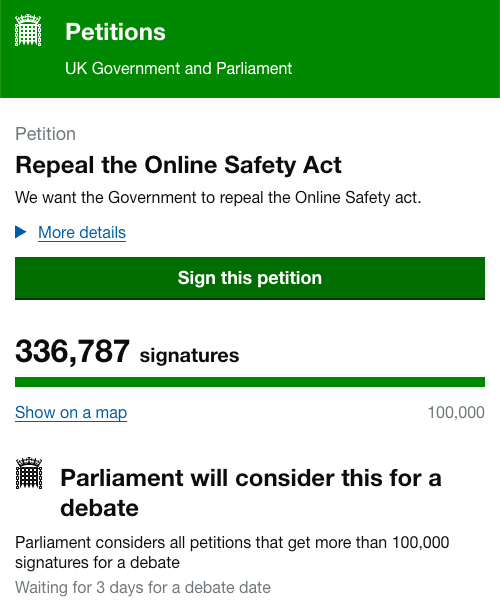
Remember the simple “I am over 18” click? Those days are quickly fading. Driven by regulations like the UK’s Online Safety Act (OSA) and the EU’s Digital Services Act (DSA), platforms are now compelled to implement “robust age checks”. This often translates into mandatory digital identification systems requiring users to verify their age through sensitive personal data such as facial recognition, government-issued IDs, or other biometric markers. This process inherently links your online activity to your real-world identity, drastically undermining the anonymity that was once a cornerstone of internet freedom.
The scale of this shift is immense: by 2024, an estimated 5 billion digital IDs were expected to be issued globally, with 137 countries and currency unions exploring these systems. But exercising these “rights” comes with a hidden cost – a “privacy paradox” where providing sensitive information for verification can inadvertently create new privacy vulnerabilities. Data brokers, for example, have been found to require sensitive information like Social Security numbers or government IDs when consumers try to exercise their privacy rights, with some never even responding after collecting this data. This exposes individuals to further risks from centralized data collection and potential misuse. [
Digital Compliance Alert: UK Online Safety Act and EU Digital Services Act Cross-Border Impact Analysis
Executive Summary: Two major digital regulatory frameworks have reached critical implementation phases that demand immediate compliance attention from global platforms. The UK’s Online Safety Act entered its age verification enforcement phase on July 25, 2025, while escalating tensions between US officials and EU regulators over the Digital Services Act highlight

Compliance Hub WikiCompliance Hub
The Financial Panopticon: How Your Money Becomes a Tool of Control
Beyond identity, your finances are also becoming a locus of surveillance. Central Bank Digital Currencies (CBDCs) are being explored by 87 countries with “surveillance capabilities,” enabling central banks and governments to gain unprecedented visibility into every financial transaction. This isn’t just about tracking; it’s about the potential ability to freeze, restrict, or even reverse transactions based on government-defined criteria, or to integrate with social credit systems to reward or punish financial behavior. Even the U.S. Congress has raised concerns that CBDCs would enable government surveillance and control over Americans’ transactions, leading to legislative efforts to prohibit them.
Adding to this, payment processors like Visa and Mastercard are increasingly acting as “unelected moral police,” censoring content by threatening platforms’ financial viability. We’ve seen this play out with gaming platforms like Steam and Itch.io, where nearly 100 adult-themed games were removed after payment processors, influenced by activist groups, pressured Valve to change its policies. This phenomenon, dubbed “financial censorship,” affects not only adult content but disproportionately impacts marginalized communities, with queer content, for instance, often being flagged as “explicit” regardless of its actual nature. [
The Great Internet Lockdown: How Payment Processors, Government Regulations, and Activist Groups Are Reshaping the Digital Landscape
An in-depth analysis of the interconnected web of censorship, control, and corporate compliance transforming the global internet in 2025 Executive Summary In July 2025, a perfect storm of regulatory enforcement, payment processor pressure, and activist campaigns converged to fundamentally alter the internet as we know it. What began as targeted

My Privacy BlogMy Privacy Blog

The Pervasive Reach of Content Censorship
The desire for “online safety” has opened the door to widespread content censorship and speech monitoring. The UK’s Online Safety Act, which became enforceable in July 2025, extends far beyond pornography, requiring age verification for any site allowing user interaction, including social media, video-sharing platforms, dating apps, and even educational platforms like Wikipedia. This broad scope has led to services withdrawing from the UK market rather than complying.
Perhaps more chillingly, the UK Home Office has established an “elite police squad” to monitor social media for “anti-migrant sentiment” and “identify early signs of potential civil unrest”. This system, critics warn, allows for the criminalization of dissent, with cases where individuals receive harsher sentences for social media posts than for heinous crimes like child rape. The Electronic Frontier Foundation has warned that the OSB will lead to a much more censored, locked-down internet for British users, undermining privacy and security worldwide. [
Steam Users Fight Back: The Battle Against Payment Processor Censorship
How Visa and Mastercard became the internet’s new moral police, and why gamers are pushing back Steam users are mobilizing in an unprecedented campaign against payment processor censorship after Valve quietly updated its publishing guidelines on July 16, 2025, to prohibit “Content that may violate the rules and standards set

My Privacy BlogMy Privacy Blog

](https://www.myprivacy.blog/steam-users-fight-back-the-battle-against-payment-processor-censorship/)
Similarly, the EU’s Digital Services Act is compelling major platforms to change their global content moderation policies, essentially making EU regulations de facto global standards through the “Brussels Effect”. US Congressional investigations have revealed that the DSA is being used to censor political speech, with even “anodyne” statements like “we need to take back our country” labeled as “illegal hate speech”. This creates a “chilling effect” on free speech, leading to self-censorship as individuals become aware of constant monitoring and potential penalties for online expression.
Proposed US legislation like the Kids Online Safety Act (KOSA) and the STOP HATE Act also raise significant concerns, potentially mandating age verification across platforms and establishing “duties of care” that could lead to broad online censorship of lawful speech, including content meant to help children.
The Balkanization of the Internet
These developments are contributing to a fragmentation of the global internet, moving away from a truly open and interconnected space. We are seeing the emergence of:
- Heavily regulated Western spheres with invasive verification and content restrictions.
- Authoritarian networks with overt political filtering, like Russia’s escalating digital crackdown, which includes fines for advertising VPNs and strong intent to ban WhatsApp, pushing citizens towards domestic, unencrypted alternatives.
- Corporate-controlled walled gardens where content is sanitized to avoid regulatory and financial pressures.
- Underground networks accessed via VPNs and other circumvention technologies, which themselves are increasingly under attack. [
Digital Watchers and Twisted Justice: How Britain’s Online Safety Act Creates Orwellian Surveillance While Real Criminals Walk Free
Britain has quietly constructed a digital surveillance state while demonstrating a justice system so backwards that social media posts now carry harsher penalties than child rape. The United Kingdom has entered a new era of digital authoritarianism that would make George Orwell’s Big Brother proud. As the Online Safety Act

My Privacy BlogMy Privacy Blog
This convergence of digital ID systems, financial surveillance, content censorship, and anti-anonymity measures, often justified under the guise of child safety, is building an infrastructure for “total digital control”. It poses a fundamental threat to human rights, particularly privacy, autonomy, free expression, and democratic participation. The choices made today will determine whether future generations inherit a world of unprecedented digital freedom or one of algorithmic control and digital servitude. [
The End of Digital Privacy: How Global Digital ID, CBDCs, and State Surveillance Are Reshaping Human Freedom
Bottom Line: A convergence of digital ID systems, central bank digital currencies, online surveillance laws, and anti-anonymity measures is creating an unprecedented global infrastructure for monitoring and controlling human behavior. From Australia’s mandatory age verification to the UK’s internet censorship laws and China’s social credit experiments, 2025 marks a watershed

My Privacy BlogMy Privacy Blog