Bottom Line Up Front: The U.S. military is rapidly expanding cyber competition programs across all service branches to develop talent and prepare for information warfare in the “competition space” below armed conflict. From the Army’s new Theater Information Advantage Detachments to Space Force’s Cyber Spartan exercises, military cyber competitions are becoming critical tools for recruiting, training, and retaining cyber warriors. [
Building Cyber Warriors: The Imperative of the Evolving Cyber Professional
In today’s digital world, where technology plays a central role in our personal and professional lives, cybersecurity has become critically important. It refers to the practice of protecting computer systems, networks, and data from unauthorized access, damage, theft, and other cyber threats. Investing in robust cybersecurity measures allows individuals, organizations,

Security Careers HelpSecurity Careers

Army Leads with New Information Warfare Focus
The U.S. Army is pioneering a new approach to cyber competition with the establishment of Theater Information Advantage Detachments (TIADs). Army Cyber Command’s forthcoming Theater Information Advantage Detachment is expected to help the service better compete against adversaries in the so-called competition phase below armed conflict.
The TIADs are a new growth for the Army. There will eventually be three to include ARCYBER’s — which will be focused on transregional threats — as well as one focused on the Pacific and another on Europe. The first TIAD is set to officially stand up in October 2025, representing a significant shift in how the Army approaches information warfare.
Key TIAD Capabilities:
- Integration of cyber, electronic warfare, information operations, psychological ops, civil affairs, and public affairs
- Command and control of information forces (not just planning)
- Focus on understanding the totality of the information space
- Layering effects across multiple domains
“How can we truly move forward and beat our adversaries and get in front of them in the information fight? Because we’re in that fight,” Col. John Agnello, commander of the 2nd TIAD, said during a presentation at the TechNet Augusta conference.
The Army is also expanding cyber capabilities at the division level. In the next two years, the Army wants to give more cyber capabilities to divisions. This tactical-level integration represents a fundamental shift in how cyber operations are conducted across the service.
Space Force: Cyber Spartan Competitions
The Space Force has developed innovative cyber competition programs, most notably the Cyber Spartan exercises. Space Delta 26, the Space Force unit that defends the National Reconnaissance Office from cyberattacks and online espionage, wanted to stage competitive training exercises this year, they used a private sector cyber range for part of the contests and run them at an unclassified level.
Cyber Spartan Competition Features:
- Blue team defensive exercises
- Capture The Flag (CTF) challenges
- Commercial cyber range utilization
- Unclassified exercises for broader participation
- Focus on defending critical space infrastructure
The second time around, though, things were much tighter. “It was razor close on both” the CTF and the blue team simulated attack events, he said. The competition’s success has planners working on expanding the program for 2025.
Navy: Blackjackets Lead the Way
The U.S. Navy established its first official Navy Cyber Competition Team (NCCT), known as the “Blackjackets,” which has achieved remarkable success in national competitions. The Navy Cyber Competition Team (NCCT) organized a small, five-person team known as the Blackjackets, that had the opportunity to display their cyber savvy during the inaugural 2021 SANS NetWars International Services Cup. [
Adopting Military Cadence in Corporate Cybersecurity: A CISO’s Guide
In the ever-evolving landscape of cybersecurity, Chief Information Security Officers (CISOs) are constantly seeking innovative strategies to protect their organizations. One approach gaining traction is the adoption of a “military cadence” in cybersecurity operations. This article explores why CISOs should consider this approach, the tactics they can incorporate, and the

Security Careers HelpSecurity Careers
](https://securitycareers.help/adopting-military-cadence-in-corporate-cybersecurity-a-cisos-guide/)
Navy Cyber Competition Achievements:
- The Navy Cyber Competition Team (NCCT), also known as the Blackjackets, placed 1st in the first ever SANS NetWars International Services Cup competition
- Scored 531 points - the most points ever scored in a NetWars tournament
- They provided over 3,000 hours of technical training to Sailors in the fleet. It was for Sailors, by Sailors.
The NCCT comprises 15 members from across 10th Fleet and serves dual purposes: improving Navy cyber expertise and recruiting future cyber warriors. “The NCCT has two real missions,” said Foppe. “One is to increase cyber expertise within the Navy but also this recruiting aspect of it as well.”
Navy Cyber Challenge Programs:
- NIWC Pacific announced the winners of a prize challenge on July 2 following a competition of the Cyber Resilient Systems Advanced Naval Technology Exercise
- Naval Academy Cyber Security Team competitions including DEADFACE CTF
- Integration with Naval Information Warfare Systems Command (NAVWAR) initiatives
Marine Corps: Capture The Flag Excellence
The Marine Corps conducts annual “Capture The Flag” Cyber Games that bring together teams from across the service. Marine reservists assigned to 6th Communication Battalion, Force Headquarters Group, Marine Corps Forces Reserve win second straight Marine Corps “Capture the Flag” Cyber Games conducted Nov. 1-5, 2021.
Marine Corps Cyber Competition Structure:
- The competition consisted of eight teams across the Marine Corps including representatives from each Marine Expeditionary Force (MEF), Marine Corps Forces Reserve (MARFORRES) and the Cyber Mission Force (CMF)
- Points awarded based on flag difficulty levels (apprentice to master)
- Focus on offensive cyber operations skills
- Integration with Marine Corps Forces Cyberspace Command (MARFORCYBER)
The Marine Corps has also pioneered cyber rotational force concepts, with Marines assigned to U.S. Marine Corps Forces Cyber Command deployed to Okinawa, Japan as part of the inaugural iteration of a new cyber rotational force concept that brings defensive cyber expertise to operational units worldwide.
Department of Defense: Cross-Service Initiatives
DoD Cyber Sentinel Challenge
The Department of Defense sponsors the Cyber Sentinel Skills Challenge, a comprehensive competition designed to identify cybersecurity talent across all military branches. The DoD-sponsored competition is designed to identify individuals interested in pursuing a cybersecurity career with the DoD and offers $15,000 in prizes.
Competition Features:
- Open to all U.S. citizens over 18
- Capture The Flag format across multiple categories
- Career opportunities in Army, Navy, Air Force, Marine Corps, and Space Force
- Focus on forensics, malware analysis, reverse engineering, and network security
President’s Cup Cybersecurity Competition
CISA leads and hosts the President’s Cup Cybersecurity Competition to identify, recognize, and reward the best cyber talent across the federal workforce. This competition includes military personnel and civilian employees from all defense agencies. [
The Wartime Fighter Mindset in Cybersecurity: Lt. Gen. Paul Stanton’s Strategic Vision
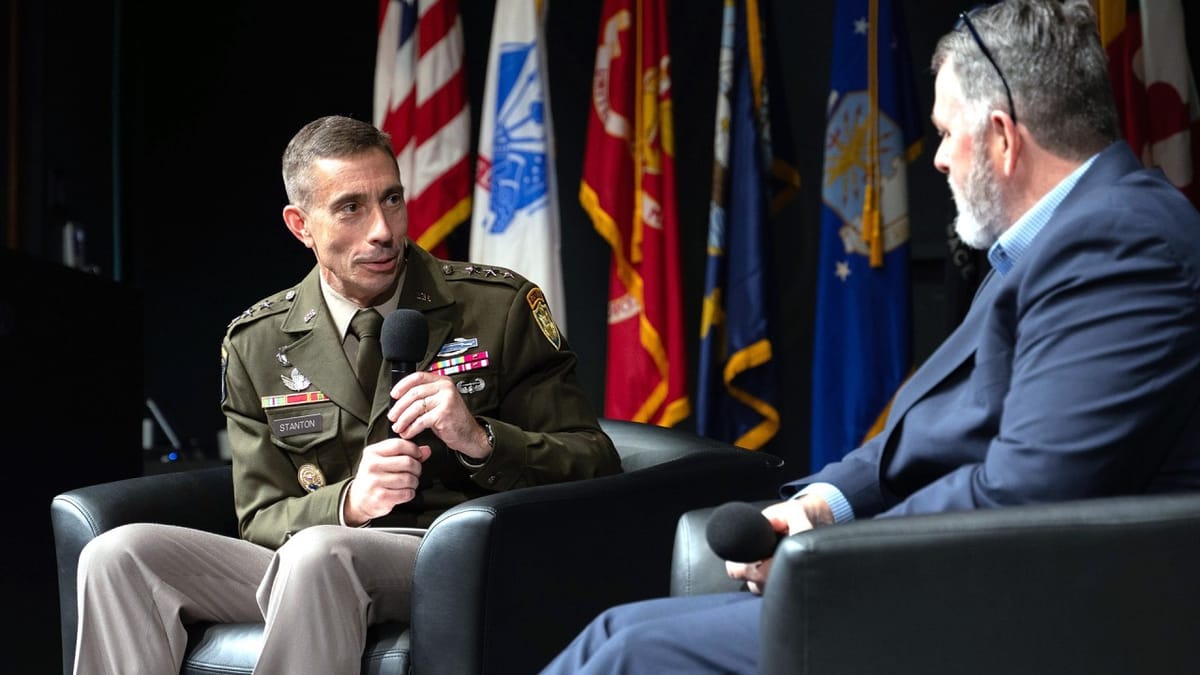
Lt. Gen. Paul T. Stanton, Director of the Defense Information Systems Agency (DISA) and Commander of the Department of Defense Cyber Defense Command, has articulated a transformative approach to cybersecurity that fundamentally reframes how organizations should think about digital defense. His concept of the “wartime fighter mindset” represents a strategic

Security Careers HelpSecurity Careers
Educational and Youth Programs
CyberPatriot: Training Future Cyber Warriors
The Air & Space Forces Association’s CyberPatriot program represents the nation’s largest youth cyber education initiative. The Air and Space Forces Association (AFA) CyberPatriot Programs are designed to help students learn more about career opportunities in cybersecurity and consistently attracts over 5,000 teams annually.
CyberPatriot Competition Divisions:
- Open Division (any high school team)
- All-Service Division (JROTC units and cadet programs)
- Middle School Division
CyberPatriot’s 17th season showcased the remarkable dedication and skill of young competitors who are shaping the future of cybersecurity with teams from California dominating recent national championships.
Other Key Educational Programs
- National Collegiate Cyber Defense Competition (CCDC): The National Collegiate Cyber Defense Competition (CCDC) is a team competition designed for students to perform administrative and protective duties and manage challenges for an existing network
- DoE CyberForce Competition: Focus on critical infrastructure protection
- National Cyber Cup: High school and middle school CTF competition
Strategic Importance and Future Outlook
The expansion of military cyber competitions reflects a broader recognition that “Our biggest fight is the competition fight. The competition fight is truly the conflict in the information space.” This shift acknowledges that adversaries have been active in the information dimension below the threshold of traditional conflict.
Key Strategic Drivers:
- Talent Pipeline Development: Competitions serve as recruitment tools for hard-to-fill cyber positions
- Skills Enhancement: Hands-on CTF and defensive exercises improve real-world capabilities
- Cross-Domain Integration: Modern competitions integrate cyber with electronic warfare, information ops, and psychological operations
- Competition Space Dominance: Focus on winning information battles before kinetic conflict begins
Recommendations for Military Leaders
- Expand Cross-Service Collaboration: Increase joint cyber exercises between military branches to share best practices and build interoperability.
- Invest in Cyber Ranges: Follow the Space Force model of leveraging commercial cyber ranges to provide realistic training environments.
- Integrate with Educational Institutions: Strengthen partnerships with programs like CyberPatriot to build a robust talent pipeline.
- Focus on Division-Level Capabilities: Support the Army’s initiative to push cyber capabilities down to tactical units.
- Emphasize Competition Space Training: Develop scenarios that specifically address information warfare in the gray zone between peace and conflict.
The rapid expansion of military cyber competitions across all service branches demonstrates the Pentagon’s commitment to building a cyber-capable force ready for 21st-century warfare. As adversaries continue to operate aggressively in cyberspace, these competition programs will become increasingly critical for maintaining America’s technological and operational edge.