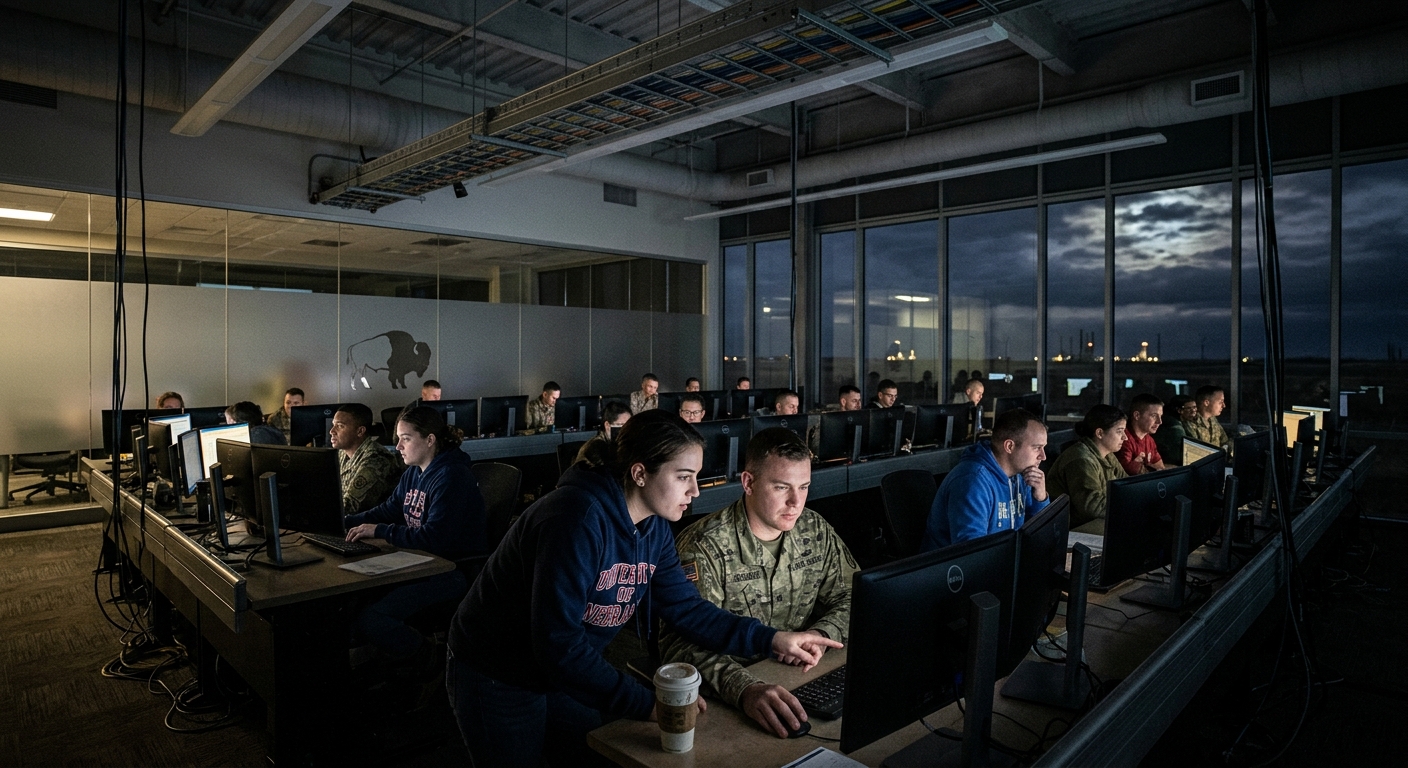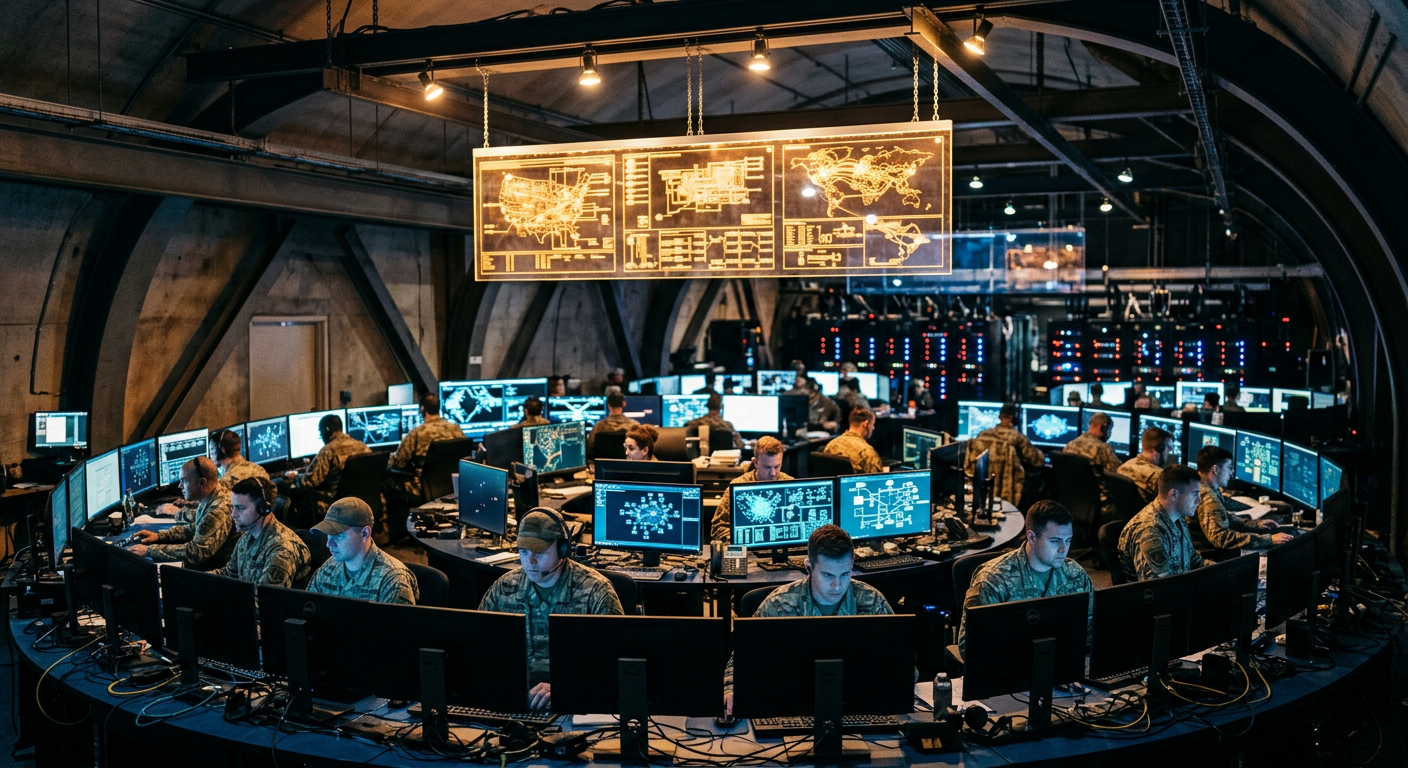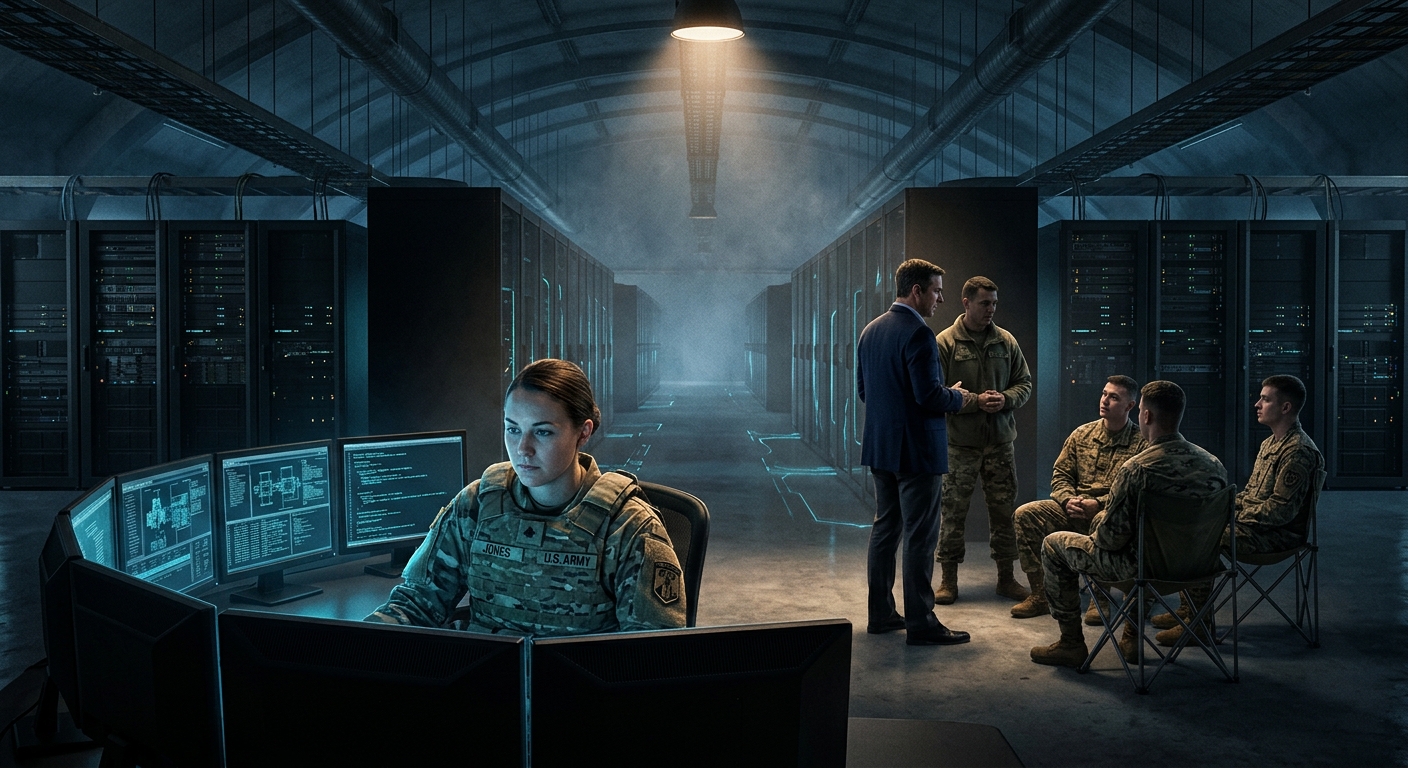
On June 9, 2026 — just days before the U.S. Army’s 251st birthday — two of the highest-ranking civilian cyber officials in the Department of War made a very deliberate trip to Fort Gordon, Georgia. The Honorable Katie Sutton, Assistant Secretary of War for Cyber Policy and Principal Cyber Advisor to the Secretary of War, and the Honorable Brandon Pugh, Principal Cyber Advisor to the Secretary of the Army, sat down with U.S. Army Cyber Command (ARCYBER) leadership, briefed soldiers, and did something you don’t often see from senior officials: they pulled junior NCOs and soldiers into a room and listened.
That sensing session at the tactical edge wasn’t incidental. It was the point. And the broader message of the visit — delivered through an All-Call on CYBERCOM 2.0 strategic messaging — is that the Army is undertaking what Sutton herself has called the most significant transformation of U.S. Cyber Command since it was established over 15 years ago.
For cybersecurity professionals, federal contractors, and anyone whose business touches the military cyber ecosystem, this is worth paying close attention to.
The Problem CYBERCOM 2.0 Is Built to Solve
To understand why the Fort Gordon visit matters, you need to understand the problem it’s responding to. In January 2026 testimony before the Senate Armed Services Committee’s Subcommittee on Cybersecurity, Sutton laid it out plainly: the Department of War’s approach to building cyber talent had not been keeping pace with an increasingly contested domain. Traditional military rotational assignment models, effective for building conventional forces, were generating generalists when the mission required specialists.
The results were predictable and painful: difficulty recruiting people with the right aptitude, an inability to retain the best operators against private sector competition, and a training pipeline that couldn’t keep pace with adversary tactics. Meanwhile, nation-state actors like Volt Typhoon and Salt Typhoon were running sophisticated, persistent campaigns specifically designed to compromise U.S. networks — campaigns that demand deep, career-long technical expertise to detect and defeat, not 18-month rotation cycles.
CYBERCOM 2.0, approved by Secretary of War Pete Hegseth, is the response. It is built on three foundational principles: Domain Mastery (career-long depth, not generalist rotations), Specialization (dedicated pathways for fields like cloud security architecture, industrial control systems, and AI), and Agility (the ability to rapidly assemble and deploy specialized teams against emerging threats). Together, these principles represent a deliberate break from how the military has historically managed people.
What CYBERCOM 2.0 Actually Builds
The initiative creates three new enabling organizations that are meant to drive the transformation:
The Cyber Talent Management Organization (CTMO) serves as the integration point between U.S. Cyber Command and the Service talent management pipelines. It embeds liaison officers across all military branches to coordinate recruitment and use data to identify and fill capability gaps across the force. Think of it as CYBERCOM finally having its own voice in how people get selected, assigned, and retained — rather than receiving whatever the services decided to push its way.
The Advanced Cyber Training and Education Center (ACTEC) is the on-demand training platform. When a new adversarial tactic is identified, ACTEC is designed to rapidly develop and deliver a training module pulled from internal expertise, industry, or academia — getting it into the hands of operational forces before the window closes. This is an explicit acknowledgment that traditional institutional training cycles are too slow for the cyber domain.
The Cyber Innovation Warfare Center (CIWC) is the operational R&D arm — designed to deliver end-to-end capability solutions to the Cyber Mission Force faster than traditional military acquisition processes allow. Material and non-material solutions together: new tools alongside new tactics, techniques, and procedures. The explicit goal is to close the loop between the operational force identifying a requirement and the capability existing to meet it.
Sutton’s oversight portfolio for the implementation spans 97 tasks across 26 lines of effort, executed by 17 key Department stakeholders. That level of detail in a Senate testimony is not standard boilerplate — it reflects a program management structure that is actually tracking execution.
The Fort Gordon Visit: Why It Happened This Way
The June 9 visit to Fort Gordon wasn’t a ribbon-cutting. It was a progress check and a message delivery mechanism rolled into one.
Sutton’s All-Call on CYBERCOM 2.0 strategic messaging served a specific purpose: ensuring the soldiers and NCOs implementing the transformation at the unit level understand what’s being built and why. Top-down transformation initiatives in the military frequently fail at the seam between strategy and execution — where the people doing the work don’t understand the intent and therefore can’t adapt intelligently when circumstances demand it.
The sensing session with junior soldiers and NCOs closed the loop in the other direction. Senior officials getting direct feedback from the tactical edge isn’t a photo opportunity — it’s an essential data source. The people closest to the current training pipeline, career management friction, and day-to-day operational demands are the ones who will surface what the briefing slides don’t show.
Also notable in the photographic record of the visit: ARCYBER Commanding General Lt. Gen. Christopher Eubank, U.S. Marine Corps Brig. Gen. William Wilburn (Deputy Principal Cyber Advisor to the Secretary of War), and ARCYBER Command Sgt. Maj. Jebin Heyse were all present. This was the full team — military and civilian, operational and policy — aligned in one location around the same message.
The Tactical Integration Dimension
One of the agenda items at Fort Gordon that hasn’t received enough attention is the discussion of integrating Cyber, Electronic Warfare (EW), and Information Operations (IO) at the tactical level.
This is actually the harder problem. CYBERCOM 2.0 is primarily a force generation reform — it’s about building better people with better career paths. But the integration of cyber with EW and IO at the tactical edge is an operational design challenge. It requires doctrine, command relationships, equipment, and training that allow a unit in the field to bring all three effects to bear coherently against an adversary in near-real-time.
The Army has been working toward this integration for years under the Multi-Domain Operations (MDO) concept. The acknowledgment at Fort Gordon that this remains an active and prioritized agenda item signals that the tactical integration piece is still very much in development — and that the force generation improvements CYBERCOM 2.0 delivers will only matter as much as the units can actually employ those capabilities in the field.
The AI Thread
Artificial intelligence came up explicitly during the Fort Gordon discussions, and it’s not background noise. The Army’s cyber modernization effort and its AI strategy are converging on the same operational requirements.
At the adversary side, AI is accelerating the speed and scale of cyber operations — enabling faster vulnerability exploitation, more adaptive intrusion campaigns, and automated lateral movement inside compromised networks. At the friendly side, AI is the enabling technology for the kind of rapid threat detection, analyst augmentation, and autonomous response that contested cyber environments will eventually require.
CYBERCOM 2.0’s ACTEC is specifically designed to keep training current with emerging technologies — which means AI proficiency will be an increasingly central component of what the Cyber Mission Force trains to. The CIWC’s mission to deliver capabilities at the speed of need will intersect directly with AI-enabled tools as they mature from prototype to operational deployment.
The Fort Gordon visit, occurring just one week before NSPM-12 formalized the National Security Systems governance architecture (and alongside NSPM-11 on AI in the national security enterprise), places ARCYBER squarely at the center of the administration’s convergent push on cyber governance and AI-enabled operations. We covered that governance side in NSPM-12: The White House Just Rewired How America Defends Its Most Sensitive Systems.
What This Means for Industry
The CYBERCOM 2.0 framework has real implications for companies that work in or around the defense cyber space.
Training and education providers have a direct pathway here. ACTEC is explicitly designed to pull from industry and academia to deliver mission-specific training at scale. Companies with validated expertise in cloud security architecture, AI red-teaming, ICS/SCADA security, and space asset protection should be building relationships with ACTEC now — not when the next solicitation drops.
Technology vendors targeting the Cyber Mission Force should understand that the CIWC’s mandate to deliver capabilities faster than traditional acquisition means they will need to engage with CIWC as a primary customer pathway, not just the standard Program Executive Office channels. The CIWC is specifically designed to compress the requirement-to-capability timeline.
Staffing and workforce firms working in the cyber cleared space will see the CTMO become an increasingly influential actor in how the military manages cyber talent — including how it competes with the private sector for the same pool of operators. Understanding the CTMO’s targeting criteria and specialization pathways will be important for firms trying to develop talent pipelines that complement rather than simply drain the military.
Healthcare, energy, and critical infrastructure contractors should note the explicit focus in CYBERCOM 2.0 on building specialized units for ICS defense and critical infrastructure protection. This represents a potential teaming and information-sharing opportunity — and a signal that DoD is going to increase its engagement with sector-specific cyber risk.
The Bigger Picture
The Army’s 251st birthday week in 2026 was a deliberately chosen moment for this visit. Sutton and Pugh weren’t just conducting a routine engagement — they were reinforcing a narrative about institutional continuity and transformation. ARCYBER’s mission statement, as underscored at Fort Gordon, is to “set the land domain through cyber, defend the homeland, and lead the Army into a new era of AI-enabled operations.”
That’s a mission statement that connects every soldier at Fort Gordon to a national strategic purpose: the same cyber competition with China, Russia, Iran, and North Korea that shows up in NSPM-12 and the broader policy architecture. The Fort Gordon visit made that connection explicit, from the commanding general to the junior NCO in the sensing session.
CYBERCOM 2.0 is in early implementation. The three enabler organizations are not yet fully operational. The career path reforms are still being engineered. The tactical integration of cyber, EW, and IO remains a work in progress. Critics have noted — not without merit — that recreating service-level talent management and training organizations at the CYBERCOM level risks adding bureaucracy rather than reducing it.
But the commitment at the leadership level is real. Sutton personally overseeing 97 tasks across 26 lines of effort, visiting the soldiers executing the mission, and delivering strategic messaging directly to the force is not how bureaucratic initiatives usually look. Watch the ACTEC and CIWC stand-up timelines. Watch whether the CTMO actually develops meaningful career paths before the next generation of cyber talent decides the private sector is a better deal.
The Army is making its bet. The question is whether the execution matches the architecture.
Sources: DVIDS / U.S. Army Cyber Command official release (June 10, 2026); Written Testimony of Hon. Katherine E. Sutton before the Senate Armed Services Committee Subcommittee on Cybersecurity (January 28, 2026); DefenseScoop reporting on CYBERCOM 2.0; FY26 NDAA cybersecurity provisions (AFCEA); Lawfare / FDD analysis of CYBERCOM 2.0 implementation debate.
This article is provided for informational purposes only and reflects reporting and testimony available as of mid-2026. Program structures, timelines, and organizational details are subject to change as CYBERCOM 2.0 implementation proceeds.