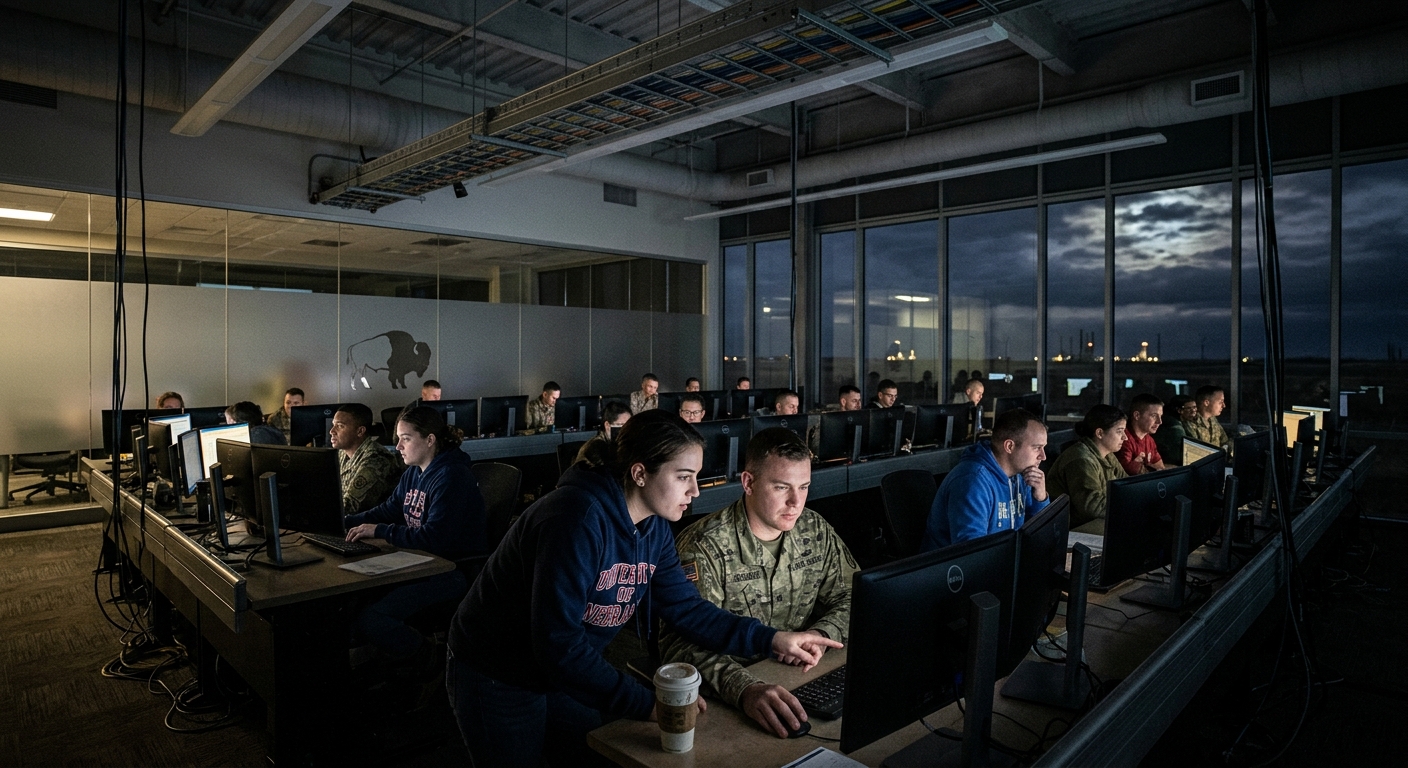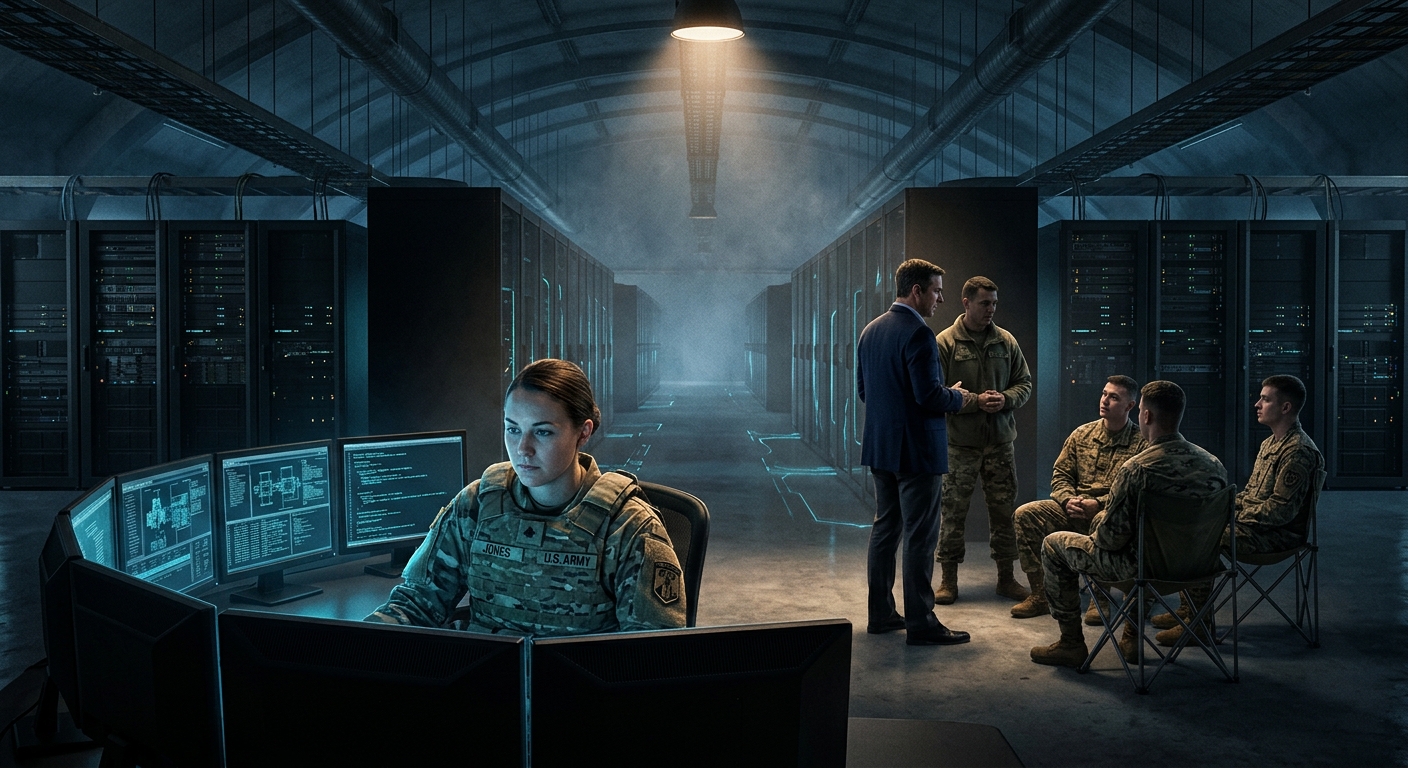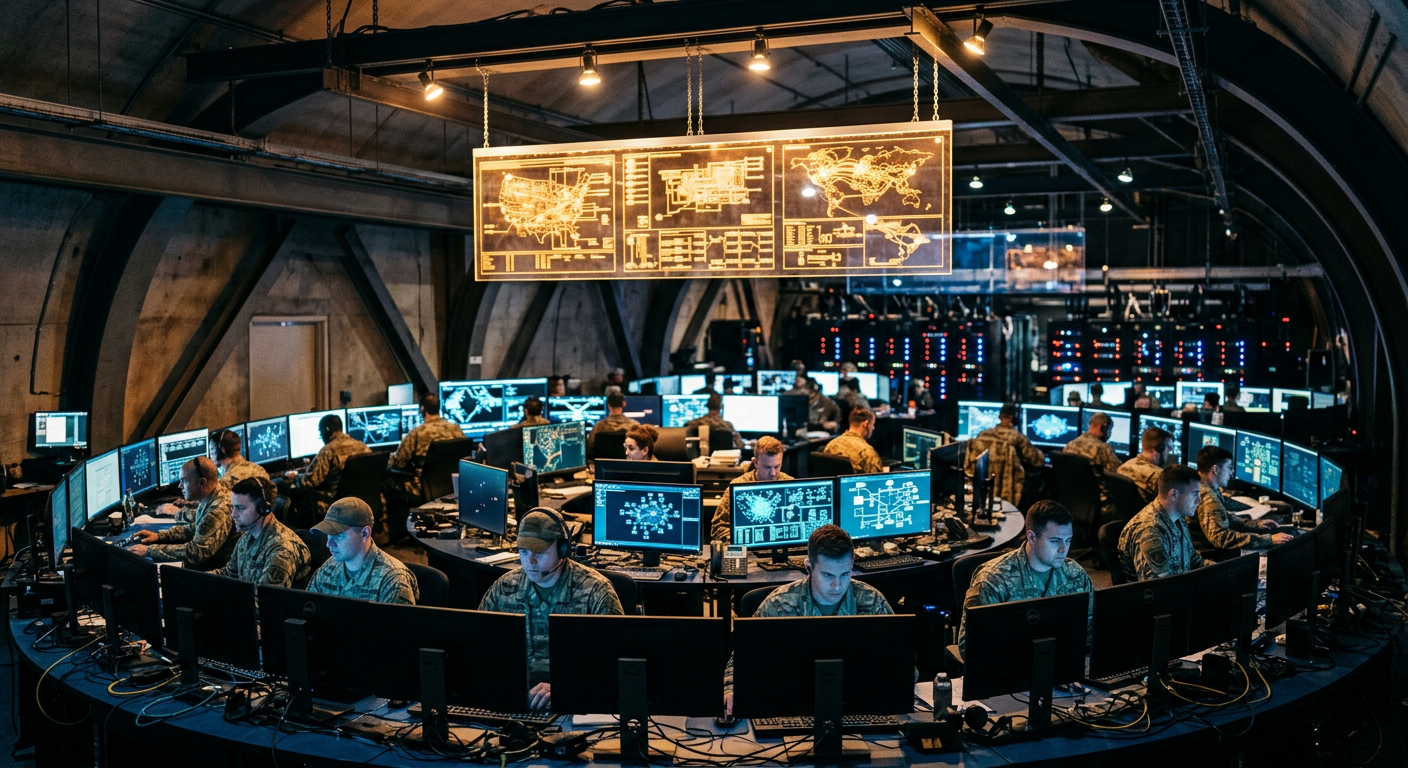
From July 12 through 25, 2026, more than 1,000 cyber professionals descended on Camp Robinson and the Professional Education Center in Little Rock, Arkansas. They came from 44 states and territories, five military branches, and 23 partner nations. For two weeks they split into blue teams and red teams, defended simulated water systems and power grids against live attacks, and worked through the messy, unglamorous reality of cyber incident response under pressure.
This was Cyber Shield 2026 — the Department of Defense’s longest-running and largest unclassified cyber defense exercise, running continuously since its inception in 2013. And while the official coverage understandably leads with the scale and the critical-infrastructure stakes, there’s a second story underneath that matters just as much to anyone building a security team or a security career: Cyber Shield is one of the most sophisticated, sustained answers we have to a question the entire industry keeps failing to solve — how do you actually build defensive cyber talent at volume?
What Cyber Shield Actually Is
Cyber Shield’s mission, in the National Guard’s own framing, is to develop, train, and exercise cyber forces in computer network internal defense and cyber incident response. In practice that means a large-scale, scenario-based exercise that integrates uniformed personnel — National Guard, active-duty, and Reserve — with civilian experts and international allies into two opposing structures.
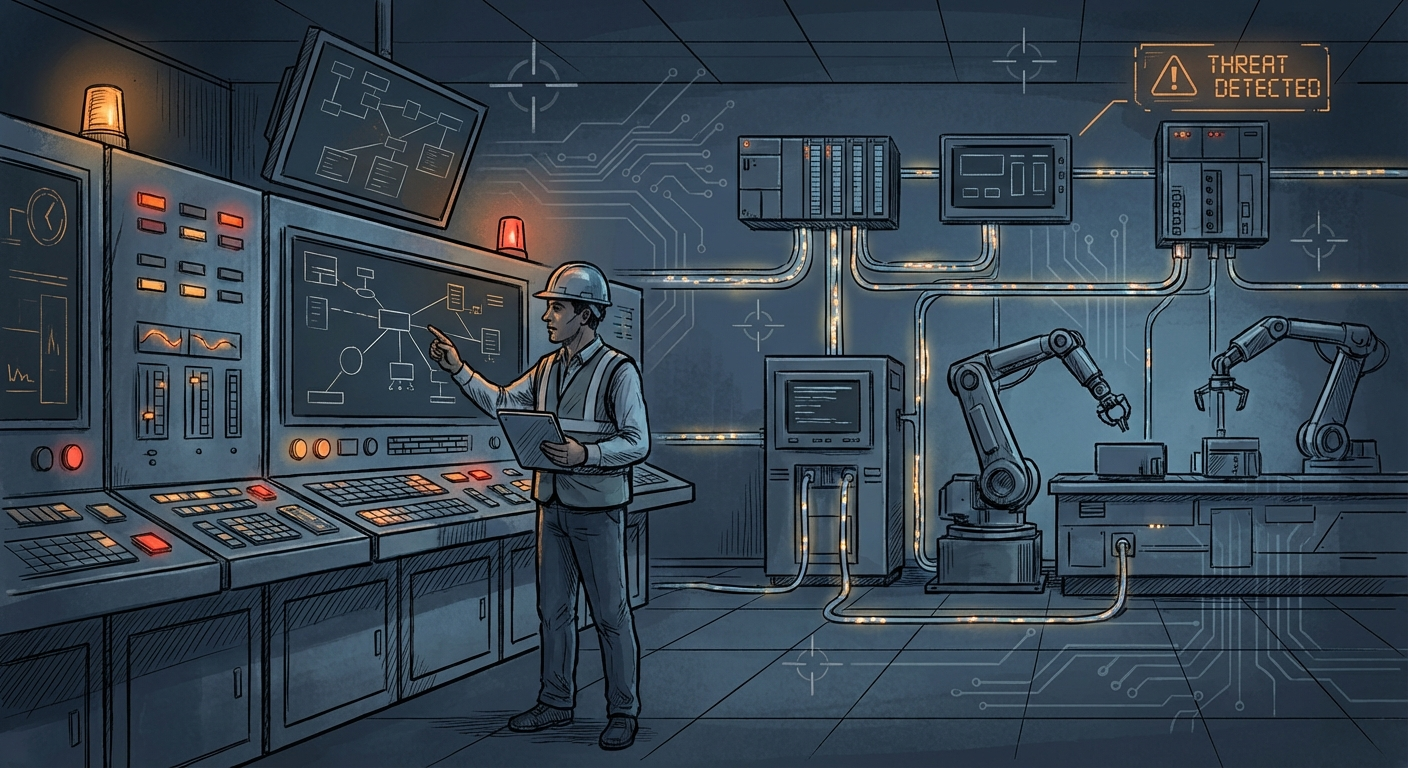
The blue teams represent friendly forces defending their networks. The red teams simulate the adversary, deploying malicious code against critical infrastructure in a closed, simulated environment. The red team attacks the water utility, the electrical grid, the industrial control systems; the blue team detects, contains, and responds in real time. The scenarios are built to mirror the tactics of real-world nation-state actors, so the defenders are practicing against something that looks like what they’ll actually face.
The stakes framing was made explicit on-site. “This is the biggest challenge that you don’t read about in our headlines,” said U.S. Congressman French Hill. “Civilian infrastructure is important: our water, our grid, and Cyber Shield has focused on that.” He went further: “Our adversaries are out to disrupt this country from within through network connectivity, and that is why we are all here today.”
That’s the part the headlines capture. But the more interesting thing about Cyber Shield is that it isn’t a one-shot war game. It’s a recurring institution — a training machine that runs every year, absorbs a thousand-plus people across the whole country, and sends them home more capable than they arrived. It is, in effect, a distributed apprenticeship program for defensive cyber, operating at a scale most private-sector security organizations can only dream about.
The Scale Is the Point
Consider what “1,000 participants from 44 states and territories” actually represents as a workforce-development feat. This is not a centralized cyber command pulling from one talent pool. It’s a federated model: each state’s National Guard maintains its own cyber capability, develops its own people, and then converges them into a shared, high-fidelity training environment once a year to stress-test everyone against a common adversary.
That federated structure is a feature, not an accident. Most of these Guardsmen are part-time — they hold civilian jobs in IT, security operations, software engineering, and beyond, and they bring that private-sector experience into the exercise. Cyber Shield becomes a two-way exchange: military rigor and structured incident-response doctrine flowing one direction, current commercial tradecraft flowing the other. It’s the kind of civil-military talent blend that a purely active-duty force struggles to replicate, and it’s why the Guard has become such a disproportionately important part of the nation’s cyber posture.
The exercise also deliberately mixes experience levels. A specialist representing a state National Guard sits on a blue team next to a seasoned incident responder and an international partner who may be encountering U.S. tooling for the first time. That heterogeneity is exactly what makes the training stick — junior people learn by doing alongside experts, in a consequence-free environment where failing the scenario is the point, not a career risk.
The International Layer: Talent Development as Diplomacy
One of the most underappreciated dimensions of Cyber Shield 2026 was the presence of 23 partner nations, brought in through the National Guard Bureau’s State Partnership Program (SPP). The SPP has spent more than 30 years building military-to-military relationships and now spans 107 partnerships with 116 nations worldwide. Cyber Shield is where those relationships get operational in the cyber domain.
The framing from Arkansas leadership was notably talent-centric. “If you are a National Guard partner and you have your state partners here, you have a requirement to ensure they have a great experience, number one, and number two, that they leave Cyber Shield better trained,” said U.S. Army Brig. Gen. Olen Bridges, the Adjutant General of the Arkansas National Guard.
Read that again through a workforce lens. The explicit, stated objective for the international contingent is that they leave better trained. Cyber defense is being treated here as a shared capability that gets stronger through collaboration, knowledge exchange, and long-term relationship-building — not as a zero-sum resource to be hoarded. That’s a philosophy worth internalizing, because it’s the opposite of how most organizations treat security expertise.
Why This Matters for Security Leaders
It would be easy to file Cyber Shield under “interesting military news” and move on. That would be a mistake. The exercise is a working model for several things that commercial security organizations chronically struggle with, and the lessons transfer directly.
Realistic, adversarial training beats certifications-on-paper. Cyber Shield’s entire design philosophy is live-fire: blue teams defend against a real red team throwing real attacks at infrastructure they care about. Compare that to how most enterprises “train” their SOC — a compliance-driven certification budget, a once-a-year tabletop, and on-the-job learning that only happens during actual incidents when the stakes are worst. If a part-time Guard force can stand up a two-week, thousand-person, red-vs-blue exercise every year, a well-resourced enterprise can absolutely run recurring purple-team engagements against its own crown-jewel systems. The barrier is prioritization, not capability. This is the same shift toward hands-on depth over generalist checkboxes that’s reshaping the military’s own cyber force under CYBERCOM 2.0.
Critical infrastructure defense is a distinct skill set, and it’s in short supply. The scenarios at Cyber Shield centered on water, power, and industrial control systems — OT/ICS environments that behave nothing like corporate IT. Defenders who can bridge the IT/OT divide are rare and increasingly non-negotiable as attacks on infrastructure move from theoretical to routine. If your organization touches energy, water, manufacturing, healthcare, or any cyber-physical system, the talent you need is being actively minted in exercises like this one — and you should be recruiting from that pool.
Federated talent models scale better than centralized ones. The Guard’s state-by-state structure, converged periodically into shared exercises, is a template a large or distributed enterprise can borrow. Rather than trying to build one monolithic elite team, develop capability across business units and regions, then bring people together regularly for high-intensity, cross-pollinating exercises. You get resilience, broader coverage, and a training multiplier all at once.
Diversity of background is a defensive advantage. The blend of full-time operators, part-time Guardsmen with day jobs in the private sector, civilian experts, and international partners is what gives Cyber Shield its edge. Homogeneous teams develop blind spots; adversaries exploit blind spots. When you’re building a defensive team, the mix of perspectives isn’t a nice-to-have — it’s a security control.
The Career Angle: This Is a Pipeline, Use It
For anyone building a career in cybersecurity — or advising people who are — Cyber Shield is a signal worth acting on.
The National Guard is a legitimate, and undervalued, cyber career accelerator. Serving part-time in a Guard cyber unit gives you access to training, clearances, and adversarial experience that would cost tens of thousands of dollars and years to accumulate in the commercial world — while you keep your civilian job. For early-career professionals trying to break into security without a traditional path, or mid-career people pivoting in, it’s one of the highest-leverage moves available. Exercises like Cyber Shield are where that investment compounds into demonstrable, hands-on-keyboard skill.
Defensive and incident-response skills are the durable bet. The whole design of Cyber Shield reflects where sustained demand lives: network defense, threat detection, incident response, forensics, and infrastructure protection. These are not skills that get automated away — they’re judgment-heavy, high-stakes, and perpetually understaffed. If you’re deciding where to invest your learning time, the blue-team disciplines that Cyber Shield drills are as safe a wager as exists in this field.
Clearance-eligible, infrastructure-savvy talent commands a premium. People who combine a security clearance, ICS/OT familiarity, and demonstrated incident-response experience sit in one of the tightest talent markets in the country. The government-adjacent and critical-infrastructure sectors compete hard for exactly the profile Cyber Shield produces. Positioning yourself — or your recruiting pipeline — toward that intersection is a strategic advantage, not a niche.
For hiring managers: veterans and Guard members are pre-vetted defensive talent. Someone who has cycled through Cyber Shield has been tested in adversarial, time-pressured, team-based defense of real infrastructure. That’s a far stronger signal than most résumé credentials. If your talent pipeline isn’t actively reaching into the Guard and veteran community, you’re leaving one of the best-trained defensive talent pools in the country on the table.
The Bigger Picture
Cyber Shield 2026 sits inside a larger story the U.S. has been telling itself with growing urgency: that the contest over critical infrastructure is already underway, that nation-state actors are inside the wire, and that the response has to be built on people, not just tools. The exercise’s continuous, year-over-year existence since 2013 is itself the argument — you don’t build a thousand-person defensive capability in a crisis. You build it slowly, deliberately, over a decade of repetitions, so that the muscle memory is there when it’s needed.
That’s the lesson that generalizes. The organizations that will defend themselves well over the next decade are not the ones with the biggest tooling budget. They’re the ones that treat talent development as a continuous, adversarial, hands-on discipline — a machine that runs every year and makes its people measurably better each time. Cyber Shield is that machine, operating at national scale and in full public view.
Most security leaders can’t run an exercise with 1,000 people and 23 nations. But almost all of them can run a smaller version of the same idea. The question Cyber Shield poses to the rest of the industry isn’t whether the model works — a decade of the exercise has answered that. The question is why so few organizations have copied it.
Sources: DVIDS — “More than 1,000 Cyber Warriors Converge on Arkansas for Cyber Shield 2026” and “Cyber Shield 2026 Strengthens Cybersecurity Globally through State Partnership Program” (July 2026); U.S. Army — “Guardsmen strengthen defensive capabilities in Cyber Shield 2026” (article 293944) and “Cyber Shield 2026 strengthens global cyber security” (article 293984); National Guard Bureau, State Partnership Program overview; quotes attributed to U.S. Rep. French Hill and U.S. Army Brig. Gen. Olen Bridges as reported in official DVIDS/Army releases.
This article is provided for informational purposes only and reflects reporting available as of mid-July 2026. Participant figures, quotes, and exercise details are drawn from official Department of Defense, U.S. Army, and National Guard public affairs releases and are subject to update as further reporting becomes available.