If you wanted to understand where cyber defense is actually heading — not in white papers, but in practice — 2026 gave you an unusually clear answer. This has been one of the busiest years on record for large-scale cyber exercises, and taken together they tell a single, coherent story. Across NATO, the U.S. National Guard, the Indo-Pacific, and a scrappy non-profit in Nebraska, the exercises of 2026 all converged on the same two commitments: defend critical infrastructure, and do it with live fire, across every sector and every border.
We’ve already covered two of this year’s standout events in depth — Cyber Shield 2026, the Department of Defense’s largest unclassified exercise, and Cyber Tatanka 2026, the civilian-led public-private-academic coalition. But they’re two points on a much larger map. This piece is the map — a guide to 2026’s major cyber exercises, what’s still ahead this fall, and what the whole pattern signals for anyone building a security team or a security career.
The 2026 Map
Here’s the year at a glance. Note how consistently the same targets recur: grids, water, hospitals, ports, satellites, 5G, banks.
| Exercise | Dates | Scale | Focus |
|---|---|---|---|
| Cyber Unity 2026 (NATO/NSPA) | Jan 26–29 | 14 nations, Luxembourg | Multinational military cyber, 3rd edition |
| Balikatan 26 Cyber Defense Exercise | April | US + Philippines + multinational | Indo-Pacific coalition defense |
| Locked Shields 2026 (NATO CCDCOE) | ~Apr 20–23, Tallinn | 4,000+ defenders, 41 nations | Live-fire: grids, 5G, satellites, e-voting |
| Cyber Yankee 2026 | May 4–15, Connecticut | 360+ personnel, 8 states | Guard + utilities: gas, water, electric |
| Cyber Tatanka 2026 | June 1–12, Nebraska | 243, 6 nations | Civilian-led public-private-academic |
| Cyber Shield 2026 | July 12–25, Arkansas | 1,000+, 44 states, 23 nations | DoD’s largest unclassified exercise |
| Cyber Coalition 2026 (NATO) | ~Nov–Dec (expected) | ~1,300+, 30+ nations (2025 figures) | Flagship collective defense |
Locked Shields 2026 — the world’s largest live-fire exercise
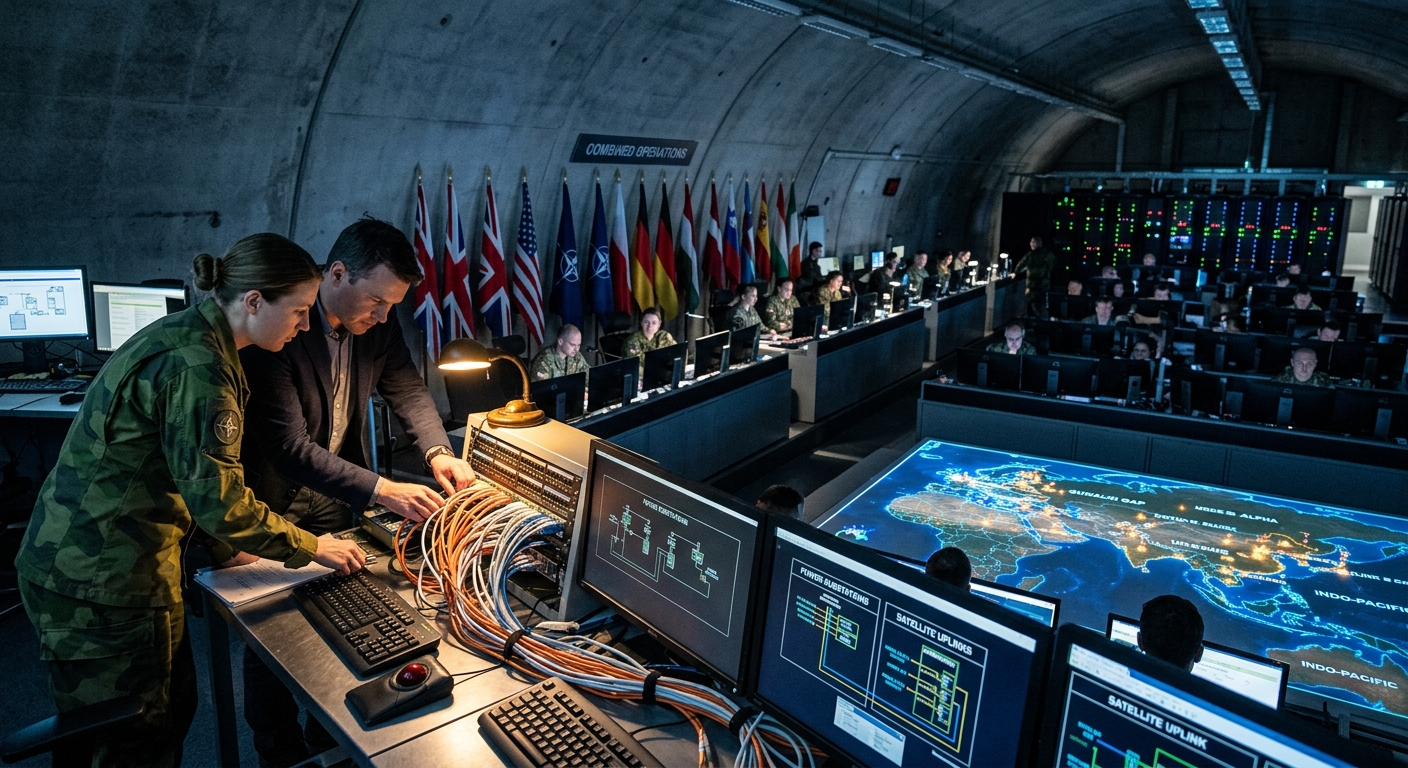
If one event defined the year’s scale, it was Locked Shields. Run by the NATO Cooperative Cyber Defence Centre of Excellence (CCDCOE) in Tallinn, Estonia, and wrapping up around April 23, the 2026 edition brought more than 4,000 cyber defenders from 41 nations into a real-time, live-fire defense of national systems. The scenarios were pointedly infrastructure-centric: participants defended simulated 5G networks, satellite management systems, power grids, and even electronic voting systems against a relentless red team. It is the largest and most complex international cyber defense exercise in the world, and it sets the template — realistic, technical, and unapologetically focused on the systems societies actually depend on.
Cyber Yankee 2026 — the utility-integration model
In May, the Connecticut National Guard ran Cyber Yankee 2026 at Camp Nett in Niantic — more than 360 personnel across six teams, drawing Guard members from Maine, Massachusetts, New Hampshire, New Jersey, New York, Rhode Island, and Tennessee. What makes Cyber Yankee distinctive is its deliberate focus on civilian critical infrastructure — gas, water, and electric systems — with 10 private industry companies participating alongside DHS, CISA, and the Department of Energy. It’s the same public-private DNA that defines Cyber Tatanka, proving the model isn’t a one-off but a spreading practice.
Cyber Shield and Cyber Tatanka — the two we’ve profiled
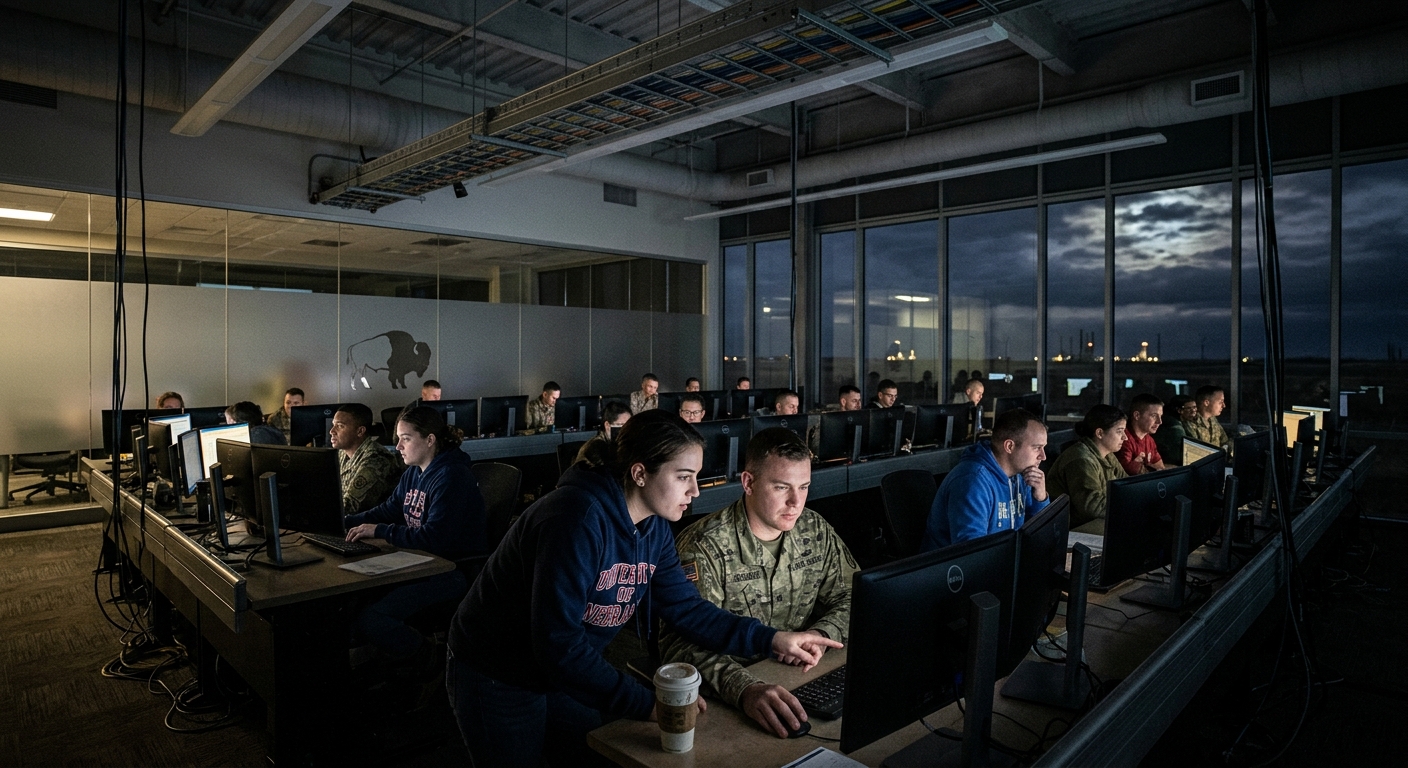
Cyber Shield 2026 (July 12–25, Arkansas) was the DoD’s largest unclassified exercise — over 1,000 participants from 44 states and territories and 23 nations, a federated model that converges the whole country’s Guard cyber capability into one live-fire crucible. Cyber Tatanka 2026 (June 1–12, Nebraska) was its hyper-local mirror image: a civilian-led, 243-person coalition of Guard, utilities, hospitals, banks, universities, and five allied nations, built on the principle that “the person is the program.” Read the deep dives on Cyber Shield and Cyber Tatanka for the full picture.
The Indo-Pacific dimension
2026 also saw the cyber center of gravity tilt toward the Indo-Pacific. The Balikatan 26 exercise in the Philippines included a multinational Cyber Defense Exercise at Camp Aguinaldo for the first time, and cyber components ran through U.S.-led exercises across the region. This mirrors budget reality — U.S. Cyber Command significantly increased its funding request for Indo-Pacific defense — and it means the allied cyber-talent network is expanding well beyond the traditional NATO core.
What’s Still Ahead This Fall
The year isn’t over, and its biggest collective-defense event is still to come.
Cyber Coalition 2026 is NATO’s flagship annual collective cyber defence exercise, and it runs in the late-November-to-early-December window. The 2025 edition gathered roughly 1,300 cyber defenders from 29 NATO Allies and seven partner nations — including Japan, South Korea, Ukraine, Ireland, Switzerland, Georgia, and Austria — working through seven complex scenarios spanning critical national infrastructure, space-related cyber incidents, and a supply-chain-style “Ghost in the Backup” scenario. Notably, it’s a largely distributed exercise: most participants train from their home nations over virtual networks, with only a small control group on site in Estonia. Expect the 2026 edition to follow the same cadence and likely grow.
Also worth watching: Crossed Swords, CCDCOE’s offensive/red-team companion to Locked Shields, typically runs in December, and the U.S. Cyber Command-led Cyber Flag series continues to fold in Indo-Pacific and Five Eyes allies. The autumn calendar, in other words, keeps the momentum going right through year-end.
The Pattern That Matters
Step back from the individual events and three themes are impossible to miss.
1. Critical infrastructure is now the organizing principle of cyber defense. Every major 2026 exercise — from Tallinn to Little Rock to Lincoln — centered on grids, water, hospitals, ports, satellites, and banks rather than classified military networks. This reflects the threat reality: as one Cyber Tatanka leader put it, nation-states “now go after utilities in small Nebraska towns, regional hospitals, corner pharmacies, community banks.” The exercises have followed the adversary to where the damage actually happens.
2. Live-fire has displaced classroom-and-cert as the gold standard. Locked Shields, Cyber Yankee, Cyber Tatanka, and Cyber Shield are all built the same way: put real people on real (simulated) networks, throw escalating, ATT&CK-mapped attacks at them, and see how they perform under pressure. The paper credential is being demoted; demonstrated performance under fire is being promoted. This is the same shift toward hands-on depth over generalist checkboxes that’s reshaping the U.S. military’s own cyber force under CYBERCOM 2.0.
3. Defense has gone coalition — across sectors and borders. The single most repeated structural feature of 2026’s exercises is integration: military beside utility engineers beside university students beside foreign allies. No one is defending alone anymore, because no one can. The threat landscape is too broad for any single organization, and the exercises have institutionalized that reality.
What This Means for Security Leaders
The exercise calendar is, in effect, a free strategic forecast. Here’s how to read it into your own program.
Adopt the live-fire mindset internally. You cannot run Locked Shields, but you can run recurring, adversarial, hands-on exercises against your own crown-jewel systems — purple-team engagements, range time, realistic scenario drills. If a Nebraska non-profit and a part-time Guard force can stand these up, a resourced enterprise can too. The barrier is prioritization.
Build coalitions if you can’t build an army. The Cyber Yankee and Cyber Tatanka models — pooling defenders across organizations and the public/private line — are directly borrowable through ISACs, sector information-sharing groups, joint exercises with peers, and partnerships with your state National Guard cyber unit. Especially if you’re a regional utility, hospital, or community bank, this is how you punch above your weight.
Treat OT/ICS as a first-class discipline. The relentless infrastructure focus across every 2026 exercise is a hiring signal. Defenders who can bridge the IT/OT divide are scarce and increasingly non-negotiable. Build that capability deliberately.
The Career Angle
For anyone building a career — or advising those who are — 2026’s exercise map is a roadmap to durable value.
Live-fire experience is the credential that’s hardest to fake and easiest to sell. A defender who has held a blue-team seat at Cyber Shield, Cyber Yankee, Cyber Tatanka, or an equivalent range has a story no certification confers. Chase these experiences — Guard service, community cyber ranges, CTFs, allied exercises — and lead your résumé with them.
Critical-infrastructure and OT defense is the strategic specialization. The entire exercise ecosystem is pointing at grids, water, health, and finance, and the talent hasn’t caught up to the demand. Specializing at the security/operational-technology intersection places you in one of the tightest, most defensible, least automatable markets in the field.
The National Guard remains the most underrated accelerator. Four of this year’s marquee U.S. exercises — Cyber Shield, Cyber Yankee, Cyber Tatanka, and the Guard’s role across others — run through the National Guard. Part-time service delivers training, clearances, and adversarial reps while you keep your civilian job. For anyone trying to break in without a traditional path, it’s a door too few know is open.
For hiring managers: the exercises are talent showcases. Every participant has been tested in exactly the conditions you care about. If your recruiting pipeline doesn’t reach into Guard units, community ranges, and university cyber programs, you’re overlooking some of the best-prepared defensive talent in the world.
The Bigger Picture
2026 will be remembered as the year the cyber-exercise world stopped treating critical-infrastructure defense as a specialty scenario and made it the main event. From 4,000 defenders in Tallinn to 243 in a University of Nebraska building, the exercises spoke with one voice: the fight is over the systems that keep society running, it will be won or lost by people rather than tools, and those people are built through repeated, realistic, cross-sector fire.
The organizations and individuals who internalize that — who treat talent development as a continuous, adversarial, coalition-based discipline — are the ones who’ll be ready. The exercises have shown the way in full public view. With Cyber Coalition still to come this fall, the year isn’t done making the argument. The only real question left is who’s paying attention.
Sources: NATO CCDCOE and SHAPE releases on Locked Shields 2026 and Cyber Coalition 2025; U.S. Army / National Guard / DVIDS releases on Cyber Shield 2026, Cyber Tatanka 2026, and Cyber Yankee 2026; U.S. Indo-Pacific Command coverage of Balikatan 26; U.S. EUCOM coverage of Cyber Unity 2026; DefenseScoop reporting on U.S. Cyber Command Indo-Pacific budget. Participant figures reflect the most recent editions reported as of mid-July 2026; Cyber Coalition 2026 figures are projected from the 2025 edition.
This article is provided for informational purposes only and reflects reporting available as of mid-July 2026. Exercise dates, participant figures, and scenario details are drawn from official NATO, Department of Defense, U.S. Army, National Guard, and organizer public releases and are subject to update as further reporting becomes available.