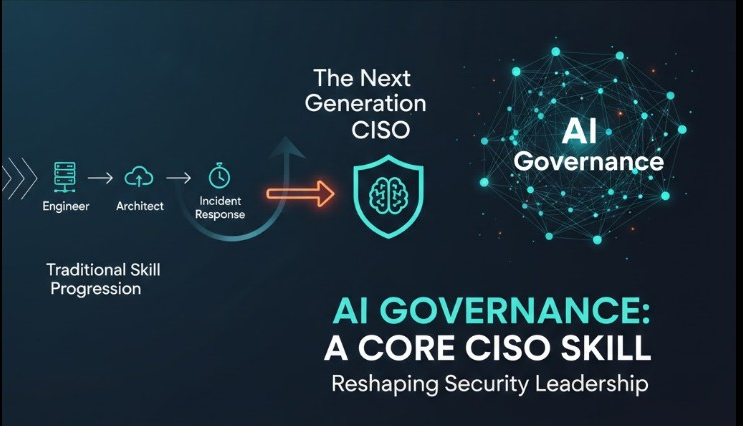
For years, security career progression followed a relatively predictable arc:
Engineer → Senior Engineer → Architect → Security Manager → Director → CISO.
The skill progression emphasized:
- Infrastructure security
- Cloud architecture
- Incident response
- Identity and access management
- Compliance and audit exposure
Artificial intelligence is disrupting that progression.
Not because AI replaces security roles.
But because AI reshapes what leadership must understand.
AI governance literacy is quickly becoming a differentiator between technical security managers and strategic security executives.
AI Defense in Action – Feb 21
40% discount code: CISOMP40 [
AI Defense in Action
A live, high-intensity workshop for security leaders and practitioners to build human-risk KPIs, red-team tests & AI-aware defense playbooks

Eventbrite
](https://www.eventbrite.com/e/ai-defense-in-action-tickets-1848270770629?aff=CISOMP&discount=CISOMP40)
The Career Shift: From Tool Expertise to System Oversight
Historically, rising security leaders built credibility through technical depth:
- Firewalls
- Endpoint detection
- SIEM engineering
- Cloud misconfiguration prevention
- Red teaming
These remain important.
But AI introduces a different layer of responsibility.
Security leaders must now understand:
- Model risk
- Data provenance
- Algorithmic bias
- Automation oversight
- Governance accountability
The conversation is no longer just:
“Is our infrastructure secure?”
It becomes:
“Are our automated decision systems secure, ethical, and accountable?”
That is a leadership question.
Not just a technical one. [
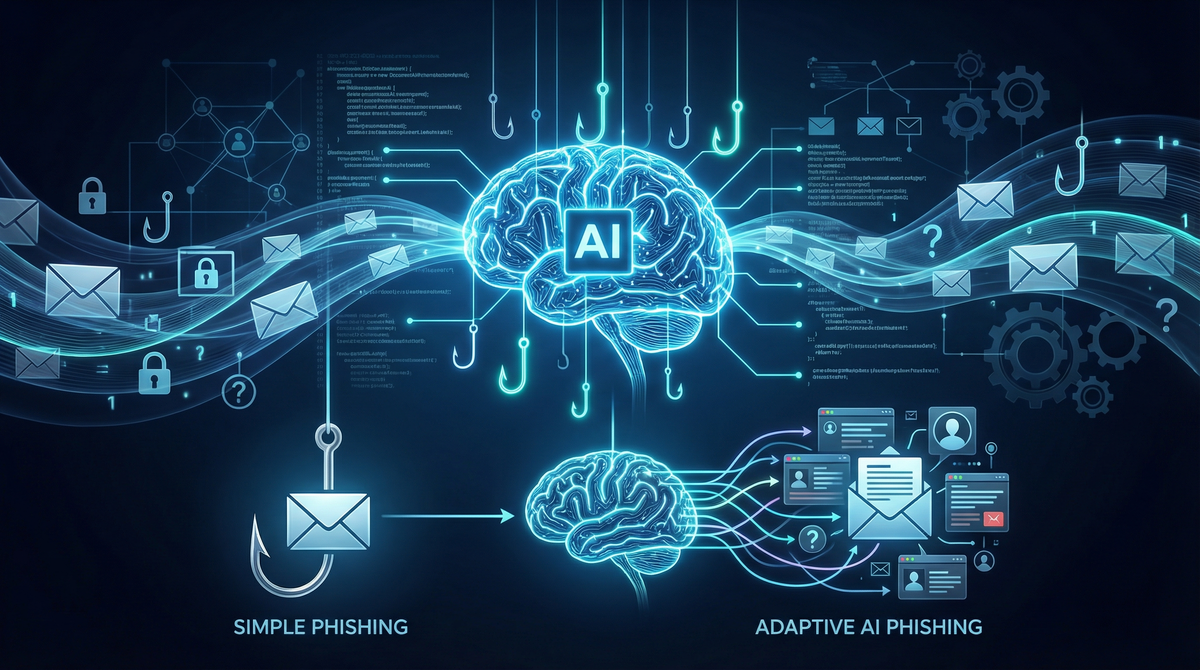
AI Phishing Kits Now Outperform Elite Human Hackers: Inside the Adaptive Threats Targeting Your Organization
The Day AI Phishing Beat the Humans In March 2025, something unprecedented happened in cybersecurity. After years of trailing behind skilled human attackers, AI-generated phishing campaigns finally crossed a threshold security researchers had been dreading: they started winning. The Hoxhunt research team had been tracking this evolution across 2.5

Security Careers HelpSecurity Careers
Why AI Governance Is a CISO-Level Skill
When AI systems fail, the impact rarely looks like a traditional breach.
It might look like:
- Biased automated hiring decisions
- AI-generated misinformation published publicly
- Sensitive data surfaced through prompt exploitation
- Automated decisions that violate regulatory frameworks
These are not “IT issues.”
They are governance failures.
Boards will not ask:
“Was the prompt injection technically complex?”
They will ask:
“Who approved deployment without controls?”
That question lands at the executive layer.
Future CISOs will need to speak fluently about:
- AI threat modeling
- Adversarial testing
- Model lifecycle controls
- Cross-functional AI governance committees
- Regulatory implications of automated decision-making
Those who cannot will struggle to move beyond operational management roles. [
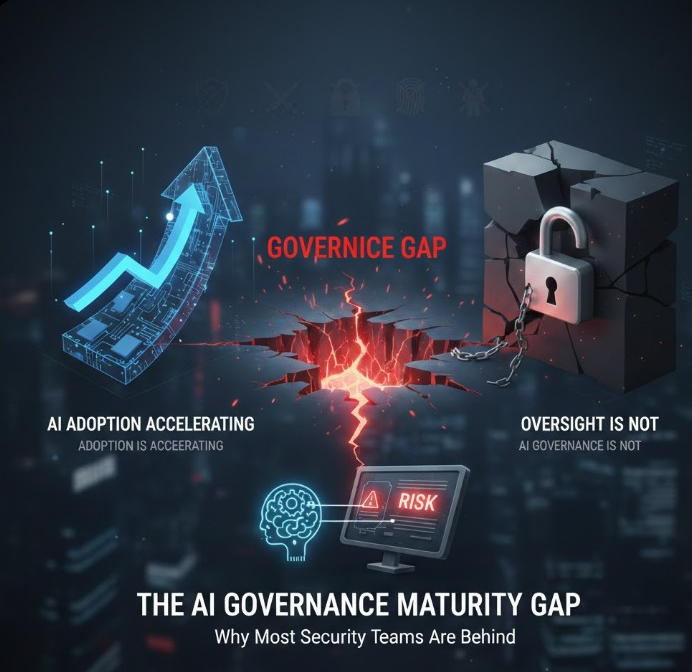
The AI Governance Maturity Gap: Why Most Security Teams Are Behind
Artificial intelligence is moving faster than security governance frameworks can adapt. Organizations are deploying large language models into workflows, automating decision chains, and integrating AI into customer-facing systems — often without fully understanding the new attack surface they are creating. The result isn’t just technical risk. It’s governance risk.

Hacker Noob TipsHacker Noob Tips
](https://www.hackernoob.tips/the-ai-governance-maturity-gap-why-most-security-teams-are-behind/)
The Emerging AI Risk Skill Stack
If you are building toward senior security leadership, AI literacy should include:
1. Adversarial AI Awareness
Understanding how models can be manipulated through prompt injection, poisoning, and behavioral exploitation.
2. Data Lineage and Provenance
Knowing where model inputs originate and how training data integrity impacts output reliability.
3. AI Threat Modeling
Extending traditional threat modeling to account for probabilistic systems and non-deterministic outputs.
4. Governance Frameworks
Building internal oversight structures that define ownership, approval processes, and monitoring requirements.
5. Executive Communication
Explaining AI risk in business terms rather than technical jargon.
This is not about becoming a machine learning engineer.
It is about understanding the risk domain well enough to govern it. [
AI Security Guards That Actually Work: How LLM Agents Are Revolutionizing Incident Response
Picture this: It’s 3:47 AM. Your company’s network just detected unusual login activity—someone accessed your database server from an IP address in Russia, then started downloading thousands of files. By the time a human analyst wakes up, reviews the alert, investigates the logs, and decides on a response,

Security Careers HelpSecurity Careers
Why This Creates Career Leverage
Every major technological shift creates winners and laggards in security leadership.
Cloud security created a new class of cloud-native security architects.
Zero Trust reshaped identity-first thinking.
AI is doing the same at the governance layer.
Security professionals who proactively build AI governance exposure will:
- Stand out in director-level promotions
- Be viewed as forward-looking strategists
- Gain board visibility
- Increase long-term CISO eligibility
Those who ignore it may remain technically competent but strategically replaceable.
How to Build AI Governance Exposure
You do not need a full ML background.
You need exposure.
Practical ways to build that include:
- Participating in AI risk assessments within your organization
- Partnering with data science teams to understand deployment pipelines
- Studying emerging AI governance frameworks
- Observing how regulators are framing automated decision accountability
- Engaging in peer-level discussion around AI security implementation
Structured workshops and peer exchanges can accelerate this learning curve.
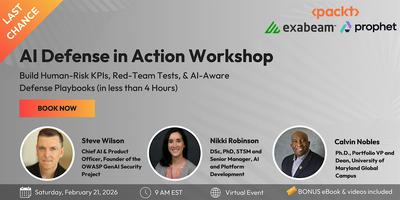
For those exploring practical implementation frameworks, we’re collaborating with Packt around their AI Defense in Action workshop, focused on applied AI security and governance practices.
Our community has access to a 40% discount for those who find it relevant.
AI Defense in Action – Feb 21
40% discount code: CISOMP40
[
AI Defense in Action
A live, high-intensity workshop for security leaders and practitioners to build human-risk KPIs, red-team tests & AI-aware defense playbooks

Eventbrite
](https://www.eventbrite.com/e/ai-defense-in-action-tickets-1848270770629?aff=CISOMP&discount=CISOMP40)
Regardless of event participation, the larger point stands:
AI governance is no longer optional knowledge for security leaders.
It is becoming core competency.
The Career Reality
The next generation of CISOs will not be selected purely on breach response experience.
They will be evaluated on:
- Governance maturity
- Cross-functional oversight
- Risk foresight
- Ability to manage emerging technologies responsibly
AI is the first major wave redefining that expectation.
Those who prepare early will not just adapt.
They will lead.