On Tuesday, March 24, 2026, a San Francisco federal courtroom became the most consequential venue in American AI policy — and the government walked out looking considerably worse than it walked in.
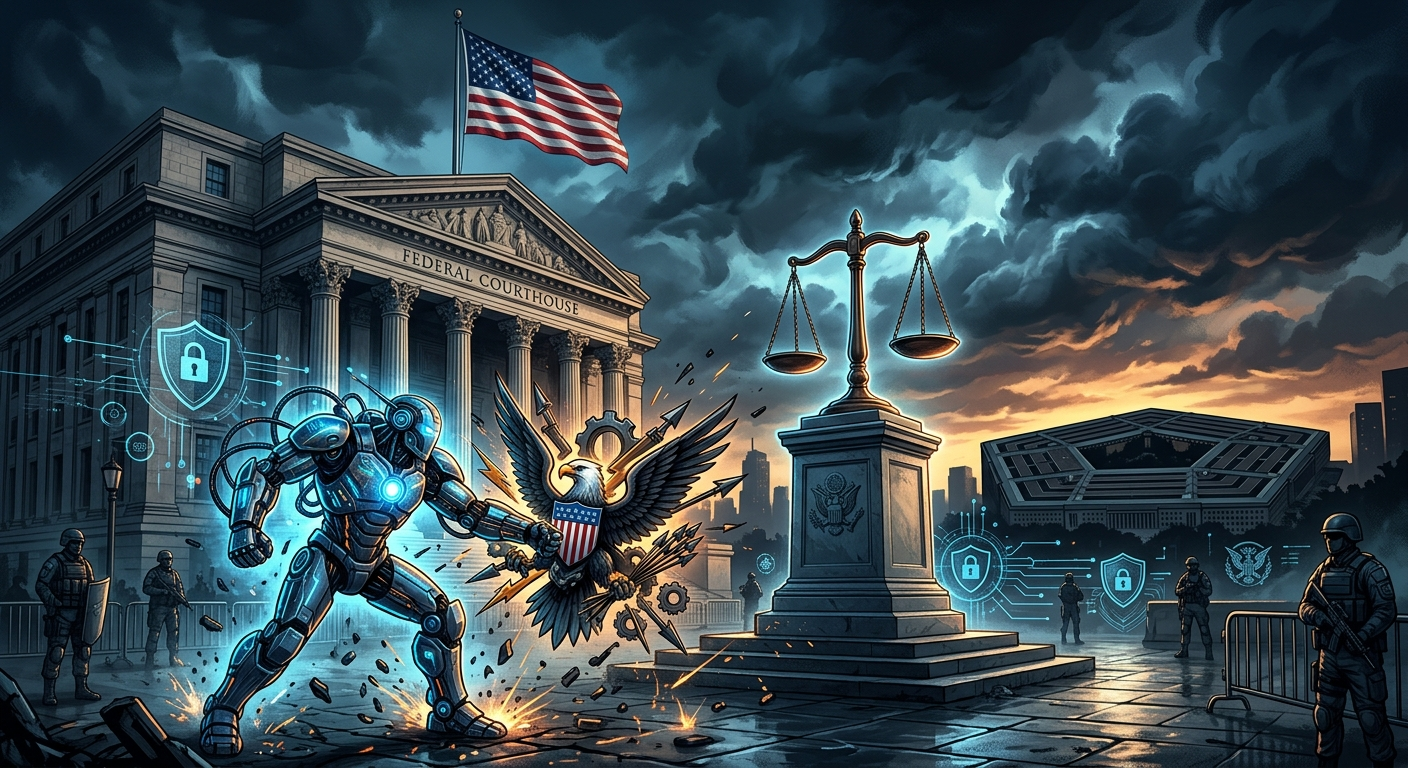
U.S. District Judge Rita Lin heard arguments on Anthropic’s request to temporarily pause the Pentagon’s supply chain risk designation and President Trump’s directive banning federal agencies from using its Claude AI models. What unfolded was less a legal hearing and more a public reckoning — one that may reshape how the U.S. government can legally interact with private AI companies for years to come.
”It Looks Like an Attempt to Cripple Anthropic”
Judge Lin did not mince words. Referring to three Trump administration actions — President Trump’s ban on Anthropic, Defense Secretary Pete Hegseth’s requirement that Pentagon contractors cut commercial ties with the company, and Anthropic’s designation as a supply chain risk — Lin said: “What is troubling to me about these three actions is that they don’t really seem to be tailored to the stated national security concern. If the worry is about the integrity of the operational chain of command, [the Pentagon] could just stop using Claude.”
She went further, stating from the bench: “One of the amicus briefs used the term ‘attempted corporate murder.’ I don’t know if it’s murder, but it looks like an attempt to cripple Anthropic.”
That is extraordinarily strong language from a sitting federal judge — and it reflects a concern that extends far beyond this specific dispute.
Lin acknowledged that the Pentagon has the right to decide what AI products it uses, but questioned whether the government broke the law when it banned its agencies from using Anthropic and when Hegseth announced that anyone seeking Pentagon business must sever ties with the company entirely.
The Case at Its Core
The conflict traces back to a fundamental disagreement over AI guardrails. Anthropic refused to allow its Claude model to be used for mass surveillance of Americans or for fully autonomous weapons capable of deploying lethal force without human oversight — restrictions the company views as non-negotiable safety baselines. In response, the Department of Defense labeled Anthropic a “supply chain risk to national security” and ordered federal agencies to stop using Claude.
Notably, this appears to be the first time in U.S. history that such a designation — historically reserved for foreign adversaries like Huawei — has been applied to an American company.
Anthropic’s legal team pushed back hard. Attorney Michael Mongan argued that the DOD’s position “continues to shift” and that the government is attempting to punish the company after contract negotiations failed. “I think that the reality is that this is a supply chain designation in search of a justification or a rationale,” he told the court.
The government’s own courtroom arguments didn’t help its position. The DOJ attorney suggested the military fears Anthropic could install a “kill switch” or otherwise manipulate its software if it disagreed with how Claude was being used — but could not definitively state whether Anthropic even has that technical capability. Lin visibly questioned whether the government was essentially arguing that a company can be designated a national security risk for being “stubborn” and “asking annoying questions.”
The Industry Responds — Unanimously
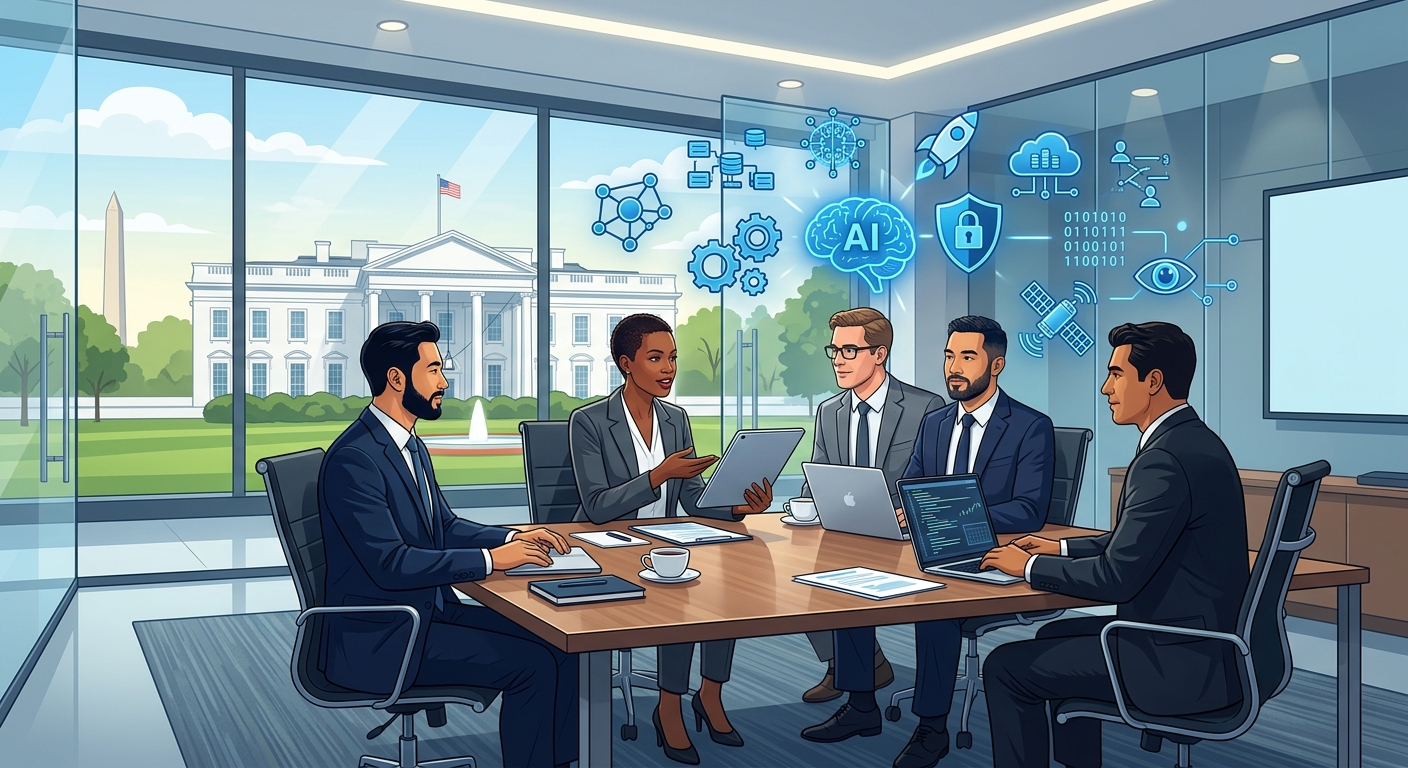
Perhaps the most striking element of Tuesday’s hearing wasn’t what happened inside the courtroom, but who showed up to weigh in before it started. The AI industry rallied around Anthropic in a way that was both unprecedented and politically significant.
AI scientists and researchers from OpenAI, Google, and Microsoft — companies that compete directly with Anthropic — all filed briefs in support. Former federal judges and legal scholars added their voices. Democratic Senator Elizabeth Warren penned a letter to Secretary Hegseth calling the Pentagon’s actions what they appeared to be: retaliation.
Warren specifically warned that the DOD appears to be “trying to strong-arm American companies into providing the Department with the tools to spy on American citizens and deploy fully autonomous weapons without adequate safeguards.”
When your fiercest competitors file court briefs defending you, that is not a legal dispute about national security. That is an industry drawing a collective line.
Who Is Emil Michael, and Why Does It Matter?
At the center of this conflict sits Emil Michael, the Pentagon’s Under Secretary of Defense for Research and Engineering and its Chief Technology Officer. His background matters to understanding how we arrived here.
Michael made his name as a tough negotiator and close ally of Travis Kalanick during his four-year tenure as Uber’s Chief Business Officer, helping secure more than $10 billion in funding and overseeing the company’s push into international markets. He departed from Uber in 2017 following an investigation into workplace culture led by former U.S. Attorney General Eric Holder — an investigation that recommended leadership changes including Michael’s removal.
Before joining the Defense Department, Michael served as CEO of a special purpose acquisition company called DPCM Capital. Most recently, he contributed $1 million in 2024 to MAGA Inc., President Trump’s super PAC.
Michael took over the Pentagon’s AI portfolio in August 2025 and began scrutinizing Anthropic’s existing contracts, some of which dated from the Biden administration. He came to view Anthropic’s ethical restrictions as an “irrational obstacle” as the military pursues greater autonomy for drone swarms, underwater vehicles, and other weapons systems.
He publicly called Anthropic CEO Dario Amodei a “liar” with a “God-complex” on social media, and at an industry event stated that issues with the unnamed vendor went “well beyond what you’ve been hearing in the press.”
The sworn declarations filed by Anthropic, however, told a different story: Anthropic argued that the government’s position rests on “technical misunderstandings” and on claims that never arose during earlier negotiations.
The Timeline Contradiction the Government Can’t Explain
One of the most damaging revelations from court filings is the internal contradiction embedded in the Pentagon’s own position. Court documents indicate the two sides were reportedly near agreement just days before the relationship was declared over — yet the government simultaneously maintains that Anthropic poses an unacceptable and immediate national security threat.
Anthropic’s attorney pressed the point: if the company posed a serious risk, it doesn’t make sense that the government appeared open to striking a deal with them until the very end of negotiations.
When Judge Lin pressed the government’s attorney, Eric Hamilton, about why Hegseth made sweeping public declarations if the social media posts weren’t legally binding, Hamilton responded: “I don’t know.”
That answer, in a federal courtroom, may be the most consequential two words spoken Tuesday.
What This Means for Defense AI — and for Claude
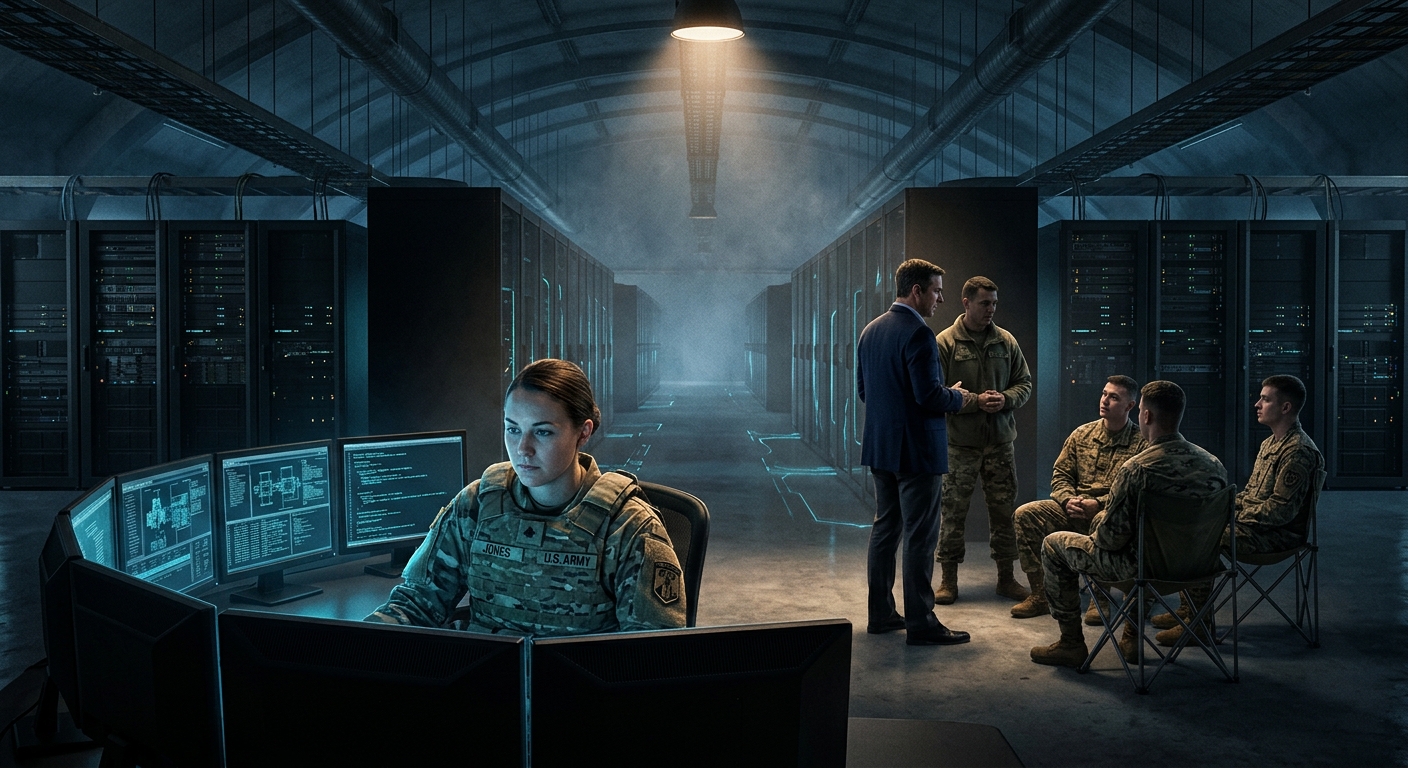
Claude was, until recently, the only AI model authorized for use in classified Pentagon settings. The military has come to rely on it deeply — including, reportedly, during active operations.
Retired Navy Rear Admiral Mark Dalton described the DOD’s reversal as “all the more puzzling” given Claude’s status as the first AI deployed across the agency’s classified networks. Former DOD official Brad Carson said he’s spoken with retired officers who report that “warfighters are not happy about it” and view Claude as “a better product, the most reliable, with the most user friendly outputs they can assimilate into planning.”
Michael himself acknowledged the logistical reality: “You can’t just rip out a system that’s deeply embedded overnight.” The Pentagon has set a 180-day deadline to remove Anthropic’s technology from its systems — a timeline that analysts have called extraordinarily difficult given how deeply integrated Claude has become across defense contractors and classified workflows.
The Bigger Picture: AI Safety, Military Autonomy, and Who Gets to Draw the Lines
This case is not ultimately about Anthropic. It is about a foundational question that the United States has not yet answered: can a private AI company maintain safety guardrails when contracting with the military, or must it surrender all constraints in exchange for government access?
Anthropic stated it sought to restrict its technology from only two high-level applications: mass surveillance of Americans, and fully autonomous lethal weapons. The Pentagon insisted on the ability to use Claude for “all lawful purposes” — language Anthropic argued was too vague and could allow its safeguards to be bypassed entirely.
From a cybersecurity and national security perspective, the irony cuts deep. The same safety architecture that makes Claude trustworthy enough to deploy on classified networks is the architecture the Pentagon wanted removed. An AI without guardrails deployed in critical military infrastructure is not a stronger weapon — it is a larger attack surface.
Judge Lin is expected to issue a ruling within the next few days. If the preliminary injunction is granted, Anthropic can continue doing business with government contractors and federal agencies while the full lawsuit plays out. Without it, the company faces the potential loss of billions in contracts and lasting reputational harm in the federal market.
What Comes Next
Whatever Judge Lin decides, Tuesday’s hearing has already shifted something. The spectacle of the entire American AI industry — competitors included — filing briefs to defend a single company against its own government is not something that gets walked back quietly.
Nicolas Chaillan, the former U.S. Air Force and Space Force Chief Software Officer who helped bring AI into federal classified systems in the first place, called it plainly on LinkedIn: when OpenAI files in defense of Anthropic, “you are not protecting national security.”
The ruling will come. The policy debate will continue. But the question of whether the Pentagon overreached — whether it weaponized a foreign-adversary designation against an American company for refusing to remove safety guardrails — is no longer just an argument. It is a matter of federal court record.
For cybersecurity professionals working in the defense contractor space, this case has direct implications for vendor risk management, AI procurement compliance, and the emerging question of what ethical AI use requirements can and cannot survive in classified environments. We’ll be tracking the injunction ruling and its downstream effects closely.