Agency faces continued uncertainty as acting director assumes control following high-profile dismissals
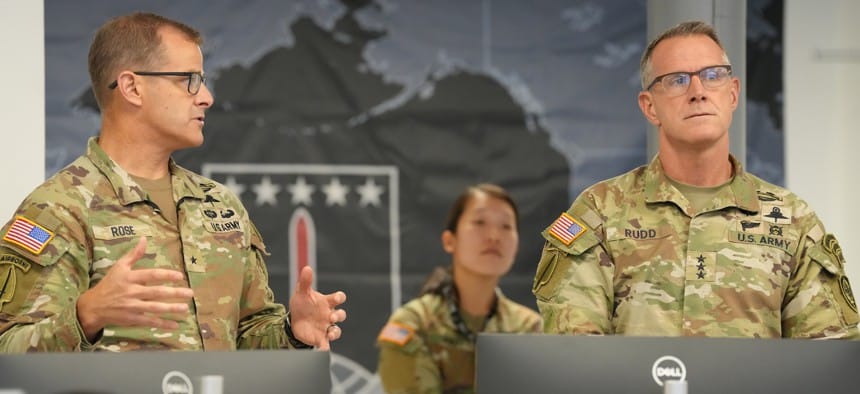
The National Security Agency finds itself navigating turbulent waters following former Director Paul Nakasone’s stark warning at Defcon that technology companies will find it “very, very difficult” to remain neutral through 2025 and 2026. The sobering assessment comes as the agency operates under acting leadership following the Trump administration’s controversial dismissal of top officials earlier this year. [
U.S. Coast Guard Cyber Operations: The Forgotten Maritime Cyber Force
Overview The U.S. Coast Guard, while often overlooked in military cyber discussions, operates one of the most unique and critical cyber missions in the federal government. As the only armed service under the Department of Homeland Security, the Coast Guard protects the $5.4 trillion Marine Transportation System (MTS)

Security Careers HelpSecurity Careers

](https://securitycareers.help/u-s-coast-guard-cyber-operations-the-forgotten-maritime-cyber-force/)
Nakasone’s Defcon Reality Check
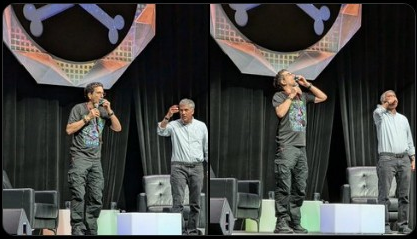
Speaking with Defcon founder Jeff Moss in Las Vegas in early August, Nakasone, now an OpenAI board member, addressed the intersection of technology and politics following the Trump administration’s removal of cybersecurity officials deemed disloyal and revocation of security clearances for former CISA directors Chris Krebs and Jen Easterly.
The former NSA chief painted a concerning picture of America’s cybersecurity landscape, declaring that ransomware remains “among the great scourges that we have in our country,” while stating the U.S. is “not making progress against ransomware”. His comments reflect growing frustration within the cybersecurity community about the persistent threat posed by criminal organizations and state-sponsored actors.
Nakasone acknowledged concerns about maintaining neutrality in the tech sphere, predicting that maintaining a sense of neutrality will become “very, very difficult” by the next Defcon conference in 2025-2026, hinting at a future where even the perception of objectivity may be unsustainable. [
U.S. Space Force Cyber Operations Structure & Capabilities
Overview The U.S. Space Force, established in December 2019, has developed unique cyber capabilities focused on protecting space assets and operations. Unlike other services, the Space Force is still developing its formal cyber component to U.S. Cyber Command and currently operates with a specialized approach to cyber operations

Security Careers HelpSecurity Careers

](https://securitycareers.help/u-s-space-force-cyber-operations-structure-capabilities/)
Leadership in Transition
The timing of Nakasone’s warnings is particularly significant given the NSA’s current state of flux. Gen. Timothy Haugh, who succeeded Nakasone as NSA Director and U.S. Cyber Command chief in February 2024, was abruptly fired by the Trump administration in April 2025, along with his deputy, Wendy Noble, the NSA’s civilian deputy director. [
Trump’s $1 Billion Cyber Gambit: America’s Dangerous Shift from Defense to Offense
A Seismic Strategic Realignment in U.S. Cybersecurity In a move that has sent shockwaves through the cybersecurity community, the Trump administration has committed $1 billion over the next four years on what it calls “offensive cyber operations” while simultaneously slashing defensive cyber budgets by an equivalent amount. This represents

Security Careers HelpSecurity Careers
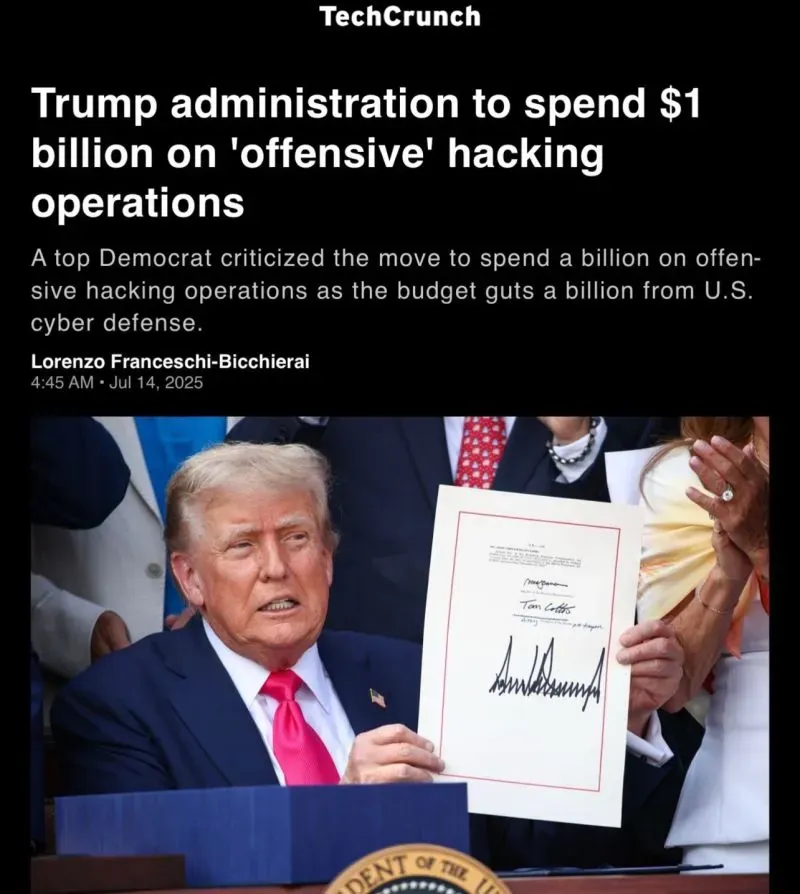
The firings came after far-right activist Laura Loomer met with President Trump and made recommendations about personnel, questioning their loyalty. Trump acknowledged speaking with Loomer and said she made recommendations, though he said any personnel decisions were his own.
Lt. Gen. William Hartman now serves as acting director of the NSA and acting commander of U.S. Cyber Command, while Sheila Thomas was designated as acting deputy director. Prior to his NSA designation, Hartman was the commander of the Cyber National Mission Force. [
U.S. Marine Corps Cyber Operations Structure & Unit Mapping
Overview The Marine Corps cyber ecosystem operates through several interconnected commands and specialized units, providing comprehensive cyberspace capabilities from defensive operations to offensive cyber warfare, signals intelligence, and information operations. U.S. Army Cyber Divisions and Psychological Operations Units: A Comprehensive OverviewIntroduction As cyberspace has emerged as the fifth warfighting

Security Careers HelpSecurity Careers
](https://securitycareers.help/u-s-marine-corps-cyber-operations-structure-unit-mapping/)
Current Leadership’s Position
While Hartman has not directly responded to Nakasone’s specific Defcon comments, his recent public statements suggest continuity in the agency’s approach. During a Senate Armed Services subcommittee hearing in April, Hartman defended the dual-hatted role that combines NSA and Cyber Command leadership, telling lawmakers it allows more “speed and agility” to take on adversaries in cyberspace. [
CISA Under Siege: Trump’s Nominee Promises Funding Amid Agency Overhaul
Sean Plankey faces heated confirmation hearing as cybersecurity agency undergoes dramatic downsizing and mission refocus The nation’s premier cybersecurity agency finds itself at a crossroads as Sean Plankey, President Donald Trump’s nominee to lead the Cybersecurity and Infrastructure Security Agency (CISA), attempts to reassure lawmakers that he can secure adequate

Security Careers HelpSecurity Careers
](https://securitycareers.help/cisa-under-siege-trumps-nominee-promises-funding-amid-agency-overhaul/)
“I’ve continued to see this partnership evolve and our ability to execute increasingly more precise operations is fundamentally because the dual hat allows me, in my current capacity, to move with the speed and agility and unity of effort that is required,” Hartman testified. [
U.S. Air Force Cyber Divisions and Psychological Operations Units: A Comprehensive Overview
Introduction The United States Air Force has developed a sophisticated cyber and information warfare capability that spans across all three components: Active Duty, Air National Guard, and Air Force Reserve. As cyberspace emerged as a critical warfighting domain, the Air Force established specialized units to conduct operations ranging from offensive

Security Careers HelpSecurity Careers

Congressional Concerns
The leadership changes have drawn sharp criticism from lawmakers. Sen. Mark Warner of Virginia, the top Democrat on the Senate Intelligence Committee, called Haugh’s firing “astonishing,” saying it occurred “while still failing to hold any member of his team accountable for leaking classified information on a commercial messaging app”.
Rep. Jim Himes of Connecticut, the ranking Democrat on the House Intelligence Committee, expressed concerns about removing experienced leadership, stating: “I have known Gen. Haugh to be an honest and forthright leader who followed the law and put national security first — I fear those are precisely the qualities that could lead to his firing in this administration”. [
U.S. Army Cyber Divisions and Psychological Operations Units: A Comprehensive Overview
Introduction As cyberspace has emerged as the fifth warfighting domain alongside land, sea, air, and space, the U.S. Army has developed a sophisticated organizational structure to conduct operations in this critical realm. From offensive cyber operations to defensive network protection, and from psychological operations to information warfare, the Army

Security Careers HelpSecurity Careers
Nakasone’s Broader Warnings
In earlier remarks this year, Nakasone warned that the United States is falling “increasingly behind” its adversaries in cyberspace, saying “our adversaries are continuing to be able to broaden the spectrum of what they’re able to do to us”.
He has consistently called for stronger public-private partnerships, arguing that the NSA and Cyber Command can provide threat intelligence and technical expertise, but the tech industry must take the lead in implementing robust security measures. [
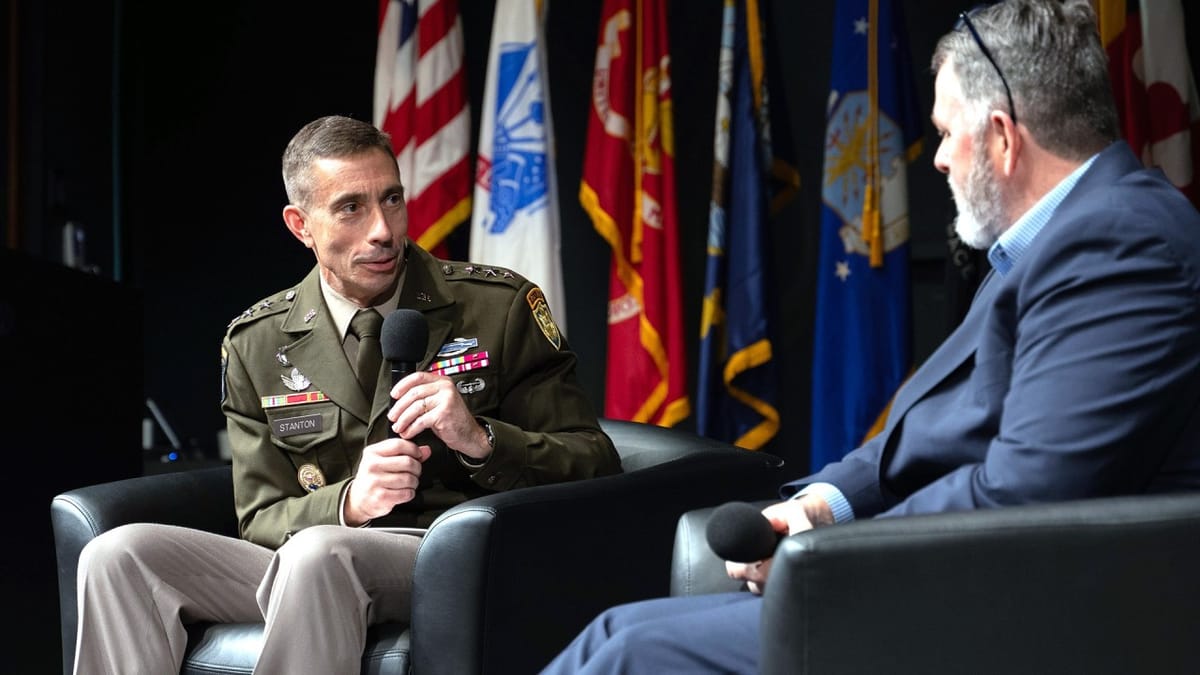
The Wartime Fighter Mindset in Cybersecurity: Lt. Gen. Paul Stanton’s Strategic Vision
Lt. Gen. Paul T. Stanton, Director of the Defense Information Systems Agency (DISA) and Commander of the Department of Defense Cyber Defense Command, has articulated a transformative approach to cybersecurity that fundamentally reframes how organizations should think about digital defense. His concept of the “wartime fighter mindset” represents a strategic

Security Careers HelpSecurity Careers
Looking Forward
As Nakasone noted during a press conference in April, the removal of top leadership “gotta cause disruptions” within both the NSA and Cyber Command. However, he praised Hartman’s qualifications, describing him as someone who is “at the top of his game, in terms of counterterrorism, counter-cyber, working with people, being an inspirational leader”.
The agency now faces the challenge of maintaining operational effectiveness while operating under acting leadership during a period of heightened cyber threats. With ransomware attacks continuing to plague critical infrastructure and state-sponsored hackers targeting everything from telecommunications networks to government systems, the stakes for stable leadership have never been higher. [
Building Cyber Warriors: The Imperative of the Evolving Cyber Professional
In today’s digital world, where technology plays a central role in our personal and professional lives, cybersecurity has become critically important. It refers to the practice of protecting computer systems, networks, and data from unauthorized access, damage, theft, and other cyber threats. Investing in robust cybersecurity measures allows individuals, organizations,

Security Careers HelpSecurity Careers

As the cybersecurity community grapples with Nakasone’s warning about the difficulty of remaining neutral in an increasingly politicized environment, the NSA’s ability to maintain its mission focus while navigating political pressures will be closely watched by allies, adversaries, and the private sector alike.
Bottom Line: The NSA continues its critical cybersecurity mission under acting leadership following significant personnel changes, while former director Nakasone’s Defcon warnings highlight the growing challenges facing both government agencies and private sector partners in an increasingly politicized cyber landscape.