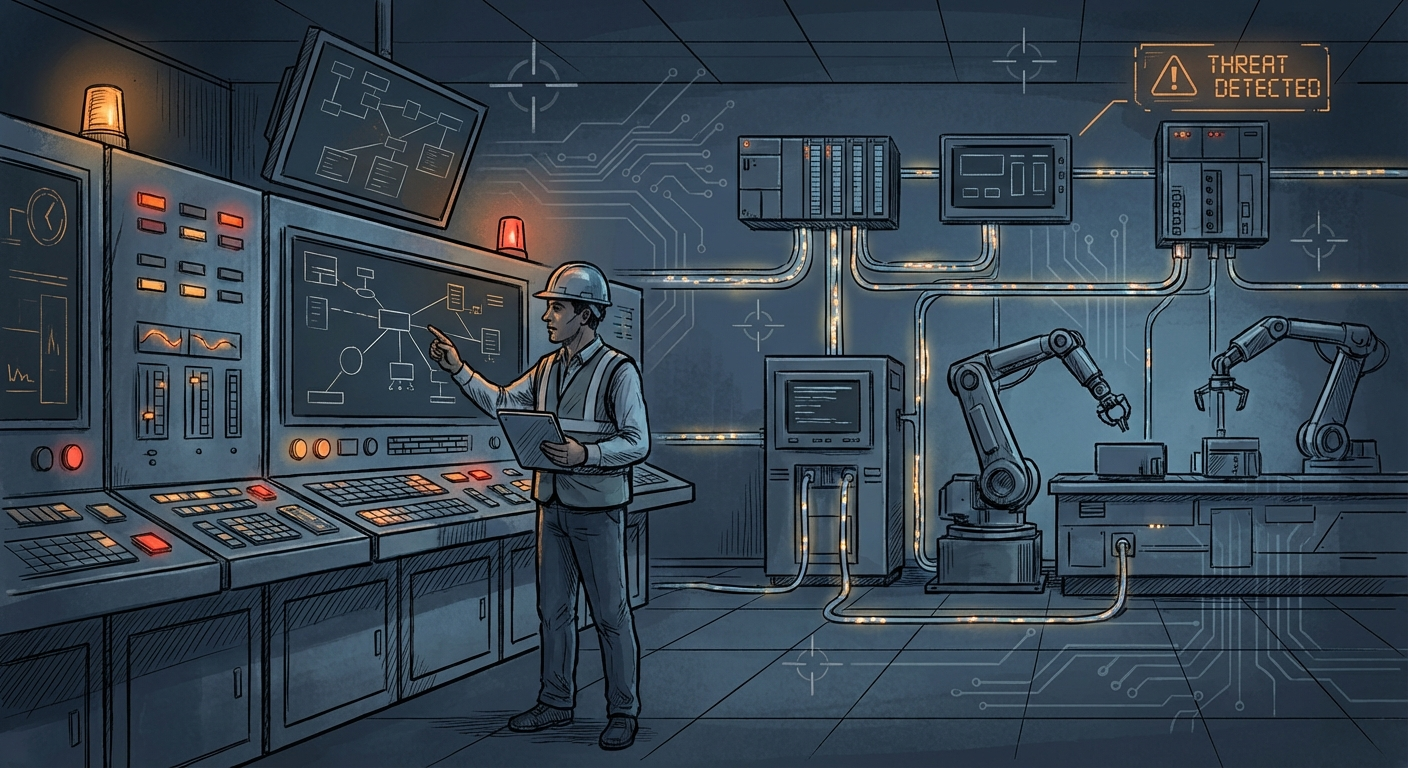
When the FBI publishes a FLASH advisory marked TLP:CLEAR, they’re not just issuing a warning — they’re handing the security community a detailed case study. FBI FLASH FLASH-20260320-001, released March 20, 2026, describes how Iranian Ministry of Intelligence and Security (MOIS) cyber actors turned Telegram’s own bot API into a command-and-control channel for a sophisticated, multi-stage malware campaign.
If you’re building a career in threat intelligence, incident response, or APT tracking, this is a document you need to dissect. Not just because Iran is a persistent threat actor — but because the tradecraft here is clever, the detection surface is narrow, and the techniques illuminate skills that are increasingly valued in the security job market.
Let’s break it down properly.
The Operation: What MOIS Was Actually Doing
The campaign has been active since at least Fall 2023 and targets a specific population: Iranian dissidents, journalists critical of the Iranian government, and opposition groups operating worldwide. The threat actor cluster associated with this campaign is Handala Hack, which researchers have linked to MOIS and also tied to the “Homeland Justice” persona used in destructive operations against other targets.
The goal isn’t financial. This is a transnational repression operation — using cyber capabilities to surveil, identify, and potentially endanger people who have fled Iran or who report critically on its government from abroad.
That context matters for how you think about this threat. The victims aren’t enterprises with security teams. They’re journalists using consumer devices, activists communicating via encrypted apps, and dissidents who often have fewer defensive resources than a mid-sized corporation.
The Tradecraft: Why Telegram-as-C2 Is Smart
The core innovation in this campaign is the use of Telegram bots as command-and-control infrastructure.
Here’s why that’s clever:
1. It abuses a trusted, ubiquitous platform. Telegram is used by hundreds of millions of people worldwide, including many journalists and activists as a secure communication channel. Traffic to api.telegram.org is commonplace on networks everywhere. Network defenders who block or alert on traffic to sketchy C2 domains will miss malware that communicates exclusively through Telegram’s official API endpoint.
2. The TLS certificate is legitimate. Because the malware connects to api.telegram.org over HTTPS using Telegram’s real certificate, SSL inspection tools see valid, trusted traffic. You cannot distinguish malicious C2 traffic from legitimate Telegram app traffic at the TLS layer alone.
3. It provides operators a ready-made, resilient, and anonymous C2 panel. Telegram bot APIs can be created in minutes with no identity verification. The operator sends commands through a bot interface. There’s no infrastructure to stand up, no C2 domain to register, no server to defend.
4. It’s harder to take down than traditional C2. Seizing a C2 domain or IP kills the connection. Getting Telegram to kill specific bot tokens requires coordination with a company that — depending on jurisdiction — may or may not cooperate. The operational resilience is meaningfully higher.
This technique isn’t unique to Iran. Researchers have documented Telegram C2 use by multiple threat actor clusters. But the MOIS campaign represents one of the more thoroughly documented examples in a public FBI advisory.
The Malware: Stage 1 and Stage 2
The payload is delivered in two stages, with the initial dropper designed to masquerade as legitimate, trusted software.
Stage 1: The Masquerade
Stage 1 malware presents itself as one of several popular applications:
- Telegram (impersonating the app the victim already trusts)
- KeePass (a password manager — the irony here is brutal)
- Pictory (an AI video generation tool)
This is a classic initial access technique: deliver malware that looks like something the target would actually want to install. For the specific population being targeted — privacy-conscious activists and journalists — KeePass in particular is a high-value lure. It’s a tool many in that community use specifically because they’re trying to protect their credentials.
Stage 1 establishes a foothold and delivers Stage 2.
Stage 2: The Persistent Implant
Stage 2 is where the real damage happens. The implant:
- Establishes persistence on the infected Windows system
- Connects to
api.telegram.orgfor command-and-control - Records screens — capturing everything the victim does visually
- Captures audio — microphone access for room audio
- Exfiltrates files — documents, credentials, anything accessible
- Records Zoom sessions — via
MicDriver.exe, which specifically targets video conferencing
The Zoom recording capability is worth highlighting. This isn’t random keylogging. The operators wanted to intercept private communications — interviews, meetings with sources, coordination calls between activists. That’s intelligence collection targeting.
The IOCs: Full Table for Your Detection Stack
The FBI FLASH includes specific indicators. Here’s the complete set in a format ready for your threat intel platform or SIEM:
| Filename | MD5 Hash | Notes |
|---|---|---|
| KeePass.exe | 7402F2F9263782A4C469570035843510 | Stage 1 — KeePass lure |
| MicDriver.dll | F8B5554808428291ACC65D1FD2EFE01C | Audio/mic capture module |
| Telegram_Authenticator.exe | B9086413E7B6A0C6A11C25D14C22615F | Stage 1 — Telegram lure |
| WhatssApp.exe | (note the double-s typo) | Stage 1 — WhatsApp lure |
| MicDriver.exe | D70EBF20E3D697897BAD5BEBF72EA271 | Zoom session recorder |
| MsCache.exe | 3E7A2FCEF1D038D05B20148C573A6499 | Persistence/caching component |
| Pictory_premium_ver9.0.4.exe | 1E6B601F733BC40EAA58916986BFC5B9 | Stage 1 — Pictory lure |
| RuntimeSSH.exe | EBDD9595B79B39F53909D862499DBC94 | Remote access component |
| smqdservice.exe | 7E23FFADB664B0E53D821478A249D84C | Service persistence mechanism |
| winappx.exe | 481C5B5E69A08C3DF206C59FD8DDC0DC | Windows app impersonation |
Network IOC: api.telegram.org — but note that this is legitimate Telegram infrastructure. You cannot simply block this without disrupting legitimate Telegram use. Detection must be behavioral, not domain-based.
Typosquatting tell: WhatssApp.exe — the double-s is an operator error that serves as a detection opportunity. Legitimate WhatsApp binaries don’t have this naming pattern.
Detection: What to Look For
Given that the C2 uses api.telegram.org, traditional domain-based detection fails. Your detection strategy needs to be behavioral and endpoint-focused:
Endpoint indicators:
- Processes named
MicDriver.exe,smqdservice.exe,RuntimeSSH.exe,winappx.exenot associated with legitimate installed software - Any of the above MD5 hashes appearing in your EDR telemetry
MicDriver.dllloaded by unexpected parent processesWhatssApp.exe— the typo itself is a detection rule
Behavioral indicators:
- Telegram desktop app NOT installed, but
api.telegram.orgtraffic observed from an endpoint - Unexpected processes making outbound HTTPS connections to
api.telegram.org - Screen capture activity combined with microphone access from non-conferencing processes
- Files staged in temp directories with names matching known lures before execution
SIEM/EDR queries to build:
- Hunt for processes connecting to
api.telegram.orgthat are notTelegram.exeor other known Telegram executables - Alert on
MicDriver.dllorMicDriver.exeprocess creation - Flag any of the above MD5 hashes across your estate
For organizations that support at-risk populations (NGOs, journalism organizations, human rights groups), consider adding these IOCs to your threat intel feeds immediately.
The Career Angle: What This Case Study Teaches You
If you’re building toward a threat intelligence, SOC analyst, or incident response career, this FBI FLASH is worth studying beyond just the IOCs. Here’s what skills it highlights:
1. Living-off-the-Land in Messaging Infrastructure
The security community talks a lot about “living off the land” (LotL) techniques — attackers using legitimate Windows tools to avoid detection. This campaign extends that concept to external messaging infrastructure. The attacker lives in Telegram’s own API. Understanding this pattern — and how to detect it behaviorally rather than by domain — is an increasingly critical analyst skill.
2. Threat Actor Attribution and Cluster Tracking
Handala Hack and “Homeland Justice” are linked actor clusters. Learning to track overlapping personas, shared infrastructure, and TTPs across campaigns is core to mid-to-senior threat intel roles. MITRE ATT&CK, group tracking in Mandiant/Recorded Future, and reading raw advisories like this one are how you build that skill.
3. Transnational Repression as a Threat Category
Most enterprise security training focuses on financially motivated threat actors. State-sponsored transnational repression is a different category with different victims, different indicators, and different defensive postures. As more organizations work with at-risk communities — journalists, activists, legal advocates — understanding this threat model is professionally differentiating.
4. OSINT on Threat Actors
Handala Hack has a public persona with documented social media presence. Learning to do structured OSINT on threat actor clusters — tracking their public communications, infrastructure patterns, and claimed operations — is a skill that combines open-source research, OPSEC analysis, and technical IOC correlation. It’s also one of the most valued skills in threat intel roles right now.
5. FBI FLASH as a Primary Source
Get comfortable reading raw government advisories (FBI FLASH, CISA advisories, NSA Cybersecurity Technical Reports). These are primary source documents with IOCs, TTPs, and context you won’t find synthesized elsewhere for days or weeks. Practitioners who read the source material before the blog summaries get ahead of their peers. That’s a career advantage.
What Defenders Should Do Right Now
If you’re responsible for protecting an organization that works with at-risk communities, journalists, or activists:
- Ingest the IOCs from this advisory into your threat intel platform, EDR, and SIEM immediately
- Hunt retrospectively — search your historical endpoint telemetry for the MD5 hashes and process names listed above
- Review Telegram network traffic — not to block it, but to identify endpoints sending to
api.telegram.orgfrom unexpected processes - Educate your users — the Stage 1 lures (KeePass, WhatsApp, Pictory) work because users trust those brands. Awareness of trojanized software delivery is the first line of defense
- Consider application allowlisting for high-risk users — it’s operationally difficult, but for populations specifically targeted by state-sponsored actors, it’s often the most effective mitigation
- Report suspicious indicators to the FBI IC3 (ic3.gov) and CISA — this advisory is TLP:CLEAR precisely because broad awareness helps
The Bigger Picture
This campaign has been running since Fall 2023. That’s a long operational window — at least 18 months of activity before a public FBI advisory. The victims targeted during that window — dissidents, journalists, opposition figures — may not have known they were compromised.
That’s the reality of state-sponsored APT operations against civil society: the threat is patient, the victims are often under-resourced, and the consequences of a successful intrusion can be severe beyond data loss. For the people targeted by MOIS, exposure means not just privacy violations but potential physical danger.
Security professionals who understand this context — who can connect technical indicators to real-world human impact — are the analysts who move from practitioner to advisor. That perspective doesn’t come from certifications. It comes from reading cases like this one all the way through.
Source: FBI FLASH FLASH-20260320-001 (TLP:CLEAR — public document). IOCs and TTPs as reported in the advisory.
Report suspicious cyber activity to the FBI at ic3.gov or your regional FBI field office.