The Gulf region’s ambitions to become a global AI powerhouse just ran into geopolitical reality.
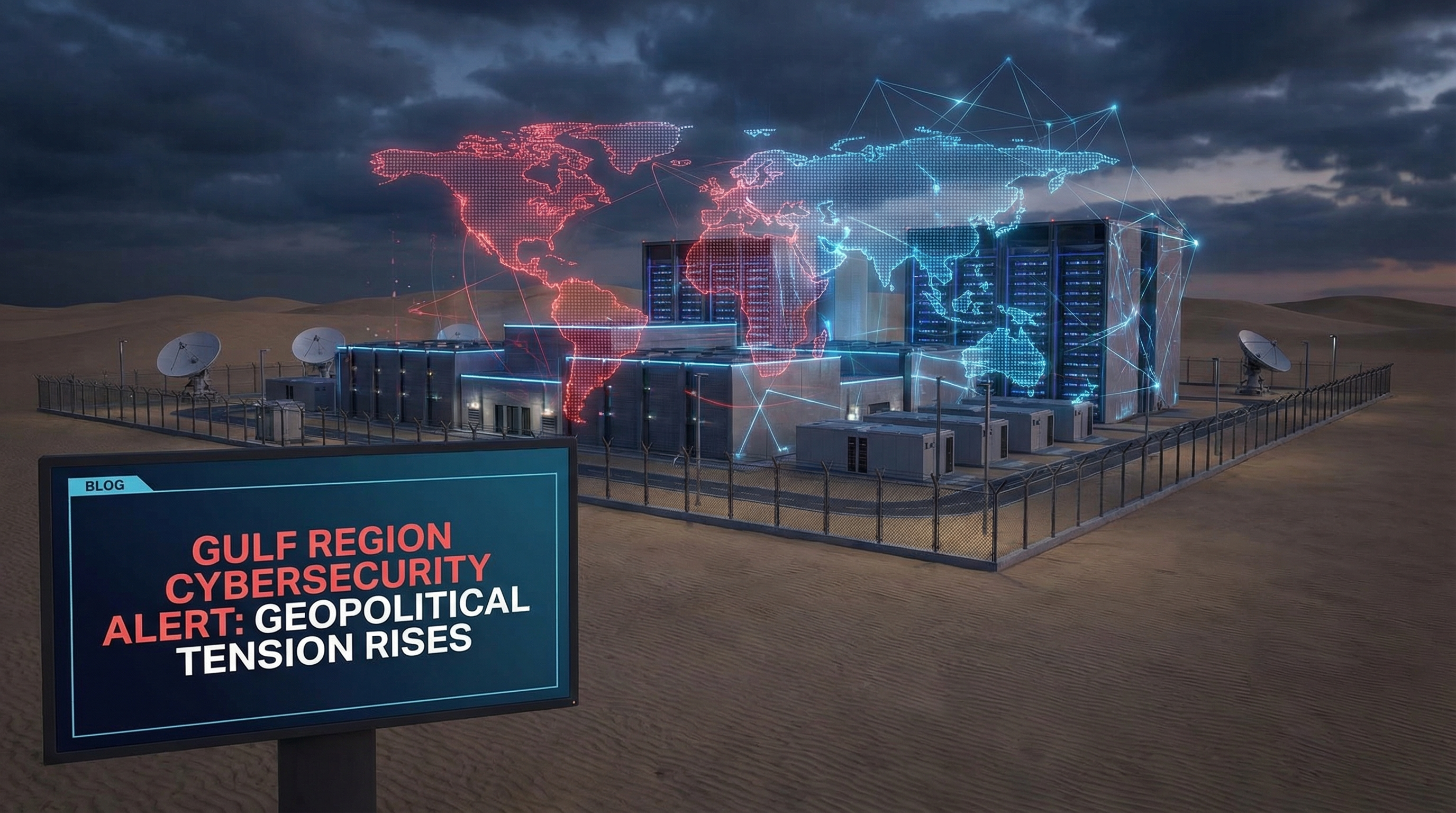
Reports have emerged of Iranian cyber operations targeting commercial datacenters in the UAE and Bahrain—attacks that represent a new frontier in asymmetric warfare and raise fundamental questions about hosting critical AI infrastructure in geopolitically contested regions.
For cybersecurity professionals, this isn’t just news—it’s a career signal. The intersection of nation-state threats, critical infrastructure, and AI security is creating one of the most important specialization opportunities of the decade.
What Happened
Iran has been conducting cyber operations against commercial datacenter infrastructure in the Gulf Cooperation Council (GCC) states, specifically targeting facilities in the UAE and Bahrain. While specific attack details remain classified or undisclosed, the pattern suggests:
- Reconnaissance and mapping of datacenter infrastructure
- Targeting of management and control systems
- Potential pre-positioning for future disruptive operations
- Intelligence collection on hosted workloads and customers
This represents an evolution from traditional nation-state targets (government, military, critical infrastructure) to commercial technology infrastructure that underpins economic activity.
Why the Gulf Matters for AI
The UAE and Saudi Arabia have invested tens of billions of dollars positioning themselves as AI hubs:
- UAE’s AI strategy aims to make it a global leader by 2031
- NEOM and other Saudi megaprojects include massive AI/tech components
- Major hyperscalers (AWS, Microsoft Azure, Google Cloud) have built or announced Gulf region datacenters
- Sovereign AI initiatives are driving local compute buildout
The logic is compelling: abundant energy, favorable regulations, geographic positioning between Asia and Europe, and significant capital. But nation-state cyber threats introduce risks that aren’t easily mitigated by money or regulatory frameworks.
Career Implications: Where the Jobs Are
1. Critical Infrastructure Security
The most direct career opportunity is in critical infrastructure protection. Organizations hosting in the Gulf—or considering it—need professionals who understand:
- OT/IT convergence in datacenter environments
- Nation-state threat actor TTPs (Tactics, Techniques, and Procedures)
- Resilience engineering for geopolitically exposed assets
- Supply chain security for datacenter components and services
Roles to watch: Critical Infrastructure Security Analyst, OT Security Engineer, Datacenter Security Architect
2. Geopolitical Risk Analysis
A new breed of security professional is emerging: one who combines technical expertise with geopolitical awareness. These roles require:
- Understanding of nation-state cyber capabilities and motivations
- Ability to translate geopolitical events into security posture recommendations
- Skills in threat modeling that accounts for political risk
- Experience briefing executive leadership and boards on geopolitical cyber risk
Roles to watch: Geopolitical Risk Analyst, Strategic Threat Intelligence Lead, Executive Security Advisor
3. AI Infrastructure Security
As AI training moves to sovereign and regional cloud environments, securing that infrastructure becomes critical:
- Securing training data pipelines against exfiltration or poisoning
- Protecting model weights and intellectual property
- Ensuring compute integrity during training runs
- Managing supply chain risk for AI-specific hardware (GPUs, TPUs)
Roles to watch: AI Security Engineer, ML Infrastructure Security Specialist, AI/ML Red Team Operator
4. Multinational Security Coordination
Organizations with global footprints need security professionals who can:
- Coordinate across jurisdictions with different legal and regulatory frameworks
- Manage security for distributed infrastructure across geopolitical boundaries
- Navigate relationships with regional CERTs, ISACs, and government agencies
- Implement security controls that satisfy multiple sovereign requirements
Roles to watch: Global Security Program Manager, Regional CISO (EMEA/APAC), International Security Counsel
Connecting This to Broader Strategy
This incident should be viewed alongside the broader shift in U.S. cyber strategy. As we covered in President Trump’s Cyber Strategy for America: Six Pillars Reshaping National Cybersecurity in 2026, the new strategic posture emphasizes:
- Offensive cyber operations to shape adversary behavior
- Securing critical infrastructure including datacenters
- Defending AI technology stack including datacenter infrastructure
- Building talent and capacity in critical security roles
Iran’s Gulf datacenter attacks are exactly the kind of threat this strategy aims to deter—and the kind of threat that creates demand for skilled security professionals.
What Organizations Should Do
For CISOs Considering Gulf Region Hosting
- Conduct threat modeling that explicitly accounts for nation-state adversaries
- Evaluate blast radius if regional infrastructure is compromised
- Implement geographic redundancy that crosses geopolitical boundaries
- Establish relationships with regional threat intelligence sources
- Build incident response playbooks for nation-state scenarios
For Security Professionals Seeking Opportunities
- Develop nation-state threat expertise — understand Iranian, Chinese, Russian, and North Korean cyber capabilities
- Learn critical infrastructure security — OT/ICS fundamentals are increasingly valuable
- Build geopolitical awareness — follow regional security dynamics, not just technical CVEs
- Get cleared if possible — many critical infrastructure roles require clearances
- Network with government and intelligence community — these relationships create opportunities
The Bigger Picture
Iran’s attacks on Gulf datacenters aren’t isolated incidents—they’re part of a broader pattern of nation-state competition playing out in cyberspace. We’ve seen similar dynamics with breached critical infrastructure and Iranian cyber operations against global targets.
For security professionals, this means:
- Geographic risk is now a core security consideration
- Nation-state threats extend to commercial infrastructure
- AI infrastructure is becoming a high-value target
- Career opportunities exist at the intersection of these trends
The Gulf’s datacenter security challenges are a preview of tensions we’ll see play out globally as AI infrastructure becomes critical national capability. Professionals who understand both the technical and geopolitical dimensions will be invaluable.
Building a career in cybersecurity? Explore our career resources and AI-powered tools for security professionals.